Saturday, 31 December 2011

Sudoku 2,071 hard

Fill the grid so that every row, every column and every 3x3 box contains the numbers 1 to 9.

For a helping hand call our solutions line on 09068 338 228. Calls cost 60p per minute at all times. Service supplied by ATS.

Buy the next issue of the Guardian or subscribe to our Digital Edition to see the completed puzzle.


guardian.co.uk © 2012 Guardian News and Media Limited or its affiliated companies. All rights reserved. | Use of this content is subject to our Terms & Conditions | More Feeds

Source: http://www.guardian.co.uk/lifeandstyle/2011/dec/31/sudoku-2071-hard

the bbc news bbc news live stream bbc news usa bbc welsh news bbc tv news bbc news live video

Eurosceptic hysteria over Nick Clegg needs a little balancing invective

Anti-Europe backwoodsmen should to be fought with scorn ? but why has it come from New York instead of from the UK press?

Here's a "great depression" taking shape, says the IMF. The whole system's "in crisis", says the Bank of England. Everyone ? including journalists ? knows we're in deep, deep trouble, especially if the euro collapses. Things couldn't be more serious; "devastating" is only the mildest of operable words. So who's to blame in these sombre times?

Why, Nick Clegg, of course ? that "fully-subscribed euro-obsessive unable to see any wrong in the misjudgments, corruptions and idiocies of the EU", a man who "shows a Moonie-like faith in the institution", blinded, as he is, "by a fanatical devotion to Brussels". Thus, of course, Simon Heffer in the Daily Mail, making an early bid to be this column's Eurocrunch Hysteric of the week. But there's so much more competition these days.

The Mail, to be sure, waxed yet hotter and stronger as "The Big Sulk" made an excuse and didn't turn up for David Cameron's post-summit report ? and howled "treachery" at the drop of a "plot". The Sun ? kicking "sulking Clegg" en passant ? might well have led on Nasty Nick if an 18-year-old blonde from The X Factor hadn't "dumped Zayn" (Zayn Malik, not Zayn Clegg).

The Telegraph saw "Cameron standing firm as his deputy runs" at a "cathartic moment" deserving "the plaudits of a majority in this country". The Times discerned "a perilous moment for the coalition". Even the Mirror got stroppy over "pygmy" jibes ? and the Express, predictably enough, was all for pulling the Lib Dem house down, doing familiar numbers on "bloated Eurocrats" with one hand while finding "eight 'very important' new leads in the hunt for Madeleine McCann" with the other. (Well, that should cheer Lord Leveson up a bit.)

Now, there was some balancing around to be sure. The Guardian and FT weren't impressed by the PM's performance. Hamish MacRae in the Independent delivered some notably counter-intuitive analysis. David Wighton in the Times argued pretty bravely that Cameron's "brave move" had "backfired". But where was the invective to match the Mail and the Express's fury? Only, bizarrely enough, in the New York Times, where Richard Cohen, a bruiser from Westminster School and Balliol, paid back the Eurosceptics in their own coin.

Insular snobs

They are "the pin-striped effluence of an ex-imperial nation" banging on about finest hours and the Luftwaffe, "politically inept ? less the fighting spirit of the Normandy hedgerows than the self-regarding hypocrisy of the giant offshore hedge fund that Britain often resembles". And "their nostalgia for British greatness is often no more than the trumpeting of a bunch of insular snobs who seem to have a hard time restraining their inner-fascist".

Phew! A trenchant New York voice ( one the late and much lamented Christopher Hitchens might have admired) praises Clegg for saying "there's nothing bulldog about a Britain hovering somewhere in mid-Atlantic" and, as he does so, booms out some of the tunes you can hear the Obama administration fluting more subtly. Then he quotes Warren Buffett: "It's only when the tide goes out that you learn who's been swimming naked."

This reaction is fascinating for two distinct reasons. One is the way the sceptic masses take American approbation for granted. Sarkozy bellyaching on we expect, but not our special relations over the pond. The other is the sheer gusto with which he sails into the attack. Why did 57% of British voters in that first Times poll after the veto support David Cameron? In part, surely, because standing alone, doing the bulldog bit, plays into the language and legends that so much of our press has made its own.

How to swing things back into kilter? For starters, by meeting fire with fire, scorn with scorn. The Lib Dems won't do that; Labour can't find its voice; the BBC is still impaled on impartiality. I'm struck by the quote from Danny Finkelstein of the Times that adorns the web home page of the new Journalism Foundation. "A free press exists to tell the truth. To empower citizens through the truth. To challenge those who don't tell it."

Over Europe, I'm afraid, you need a whole lot of challenging before you get anywhere near the truth.


guardian.co.uk © 2011 Guardian News and Media Limited or its affiliated companies. All rights reserved. | Use of this content is subject to our Terms & Conditions | More Feeds

Source: http://www.guardian.co.uk/media/2011/dec/18/eurosceptic-nick-clegg-press-comment

bbc news streaming bbc news arabic bbc news radio bbc news persian bbc news arabic bbc news radio

Lucy Mangan's pick of the week: The story, the stat, the quote, the tweet

Lucy Mangan on the people and stories in the media spotlight in the last seven days

The story

Put-upon Putin

Oh 2011, how are we to face up to a 2012 without Silvio to distract us? Ah. Step forward, unblinking iron wolfman cum once and future president of Russia, Vladimir Putin.

Putin's Russia this week has been pretty old-skool: political foes bugged and the tapes released to tame media; stooge billionaire faux-opponents created; stage-managed transfer of power from gimpish front-man back to self ongoing; faceless bureaucrats reshuffled; and sinister, international elements blamed for the trouble. The only trouble was that thousands of modern types took to the streets, daringly protesting about transparently rigged elections. Vlad has offered an "honest 2012 presidential election" as an Xmas gift to the nation, but some have heard just the hint of a dry, throaty chuckle.

But take heart, democracy lovers. Your leader has at least said publicly that "There should be dialogue", and promised to think about what form it should take. And doubtless he will, good and hard. As long as there's mobile reception and Wi-Fi works in Siberia, you should all be sitting pretty by the New Year.

The stat

�4.3bn

Amount spent at the sales on 26 and 27 December. Truly we are a strange nation.

The quote

A Korean mourner

"As we're separated from the general by death, people, mountains and sky are all shedding tears of blood. Dear Supreme Commander!" One mourner interviewed by North Korean state TV at the funeral of Kim Jong-Il does himself proud.

The tweet

@MissKatiePrice

"Some men are so 2 sided and cruel, Evil 2 some and act a god to others unbelievable" ? It's Saturday (or Sunday or Monday or Tuesday), so it must be another feuding, punctuation-optional tweet from Katie Price, this believed to be about ex-husband Peter Andre. We promise not to keep you posted.


guardian.co.uk © 2011 Guardian News and Media Limited or its affiliated companies. All rights reserved. | Use of this content is subject to our Terms & Conditions | More Feeds

Source: http://www.guardian.co.uk/theguardian/2011/dec/31/lucy-mangan-this-week-putin

bbc tv news bbc news live video bbc news europe bbc news russian bbc news home page bbc news online radio

Death and glory in the ring as children train to become superstar matadors

Bullfighters in Mexico learn from an early age ? children as young as five join bullfighting academies every year

Last week Michelito Lagravere turned 14. It was a significant birthday. This is the year Michelito plans to make bullfighting history by becoming the youngest matador ever.

He has form. Michelito first stood in front of a calf aged five. In November 2009, then 11, he became the youngest novillero, or semi-professional bullfighter in the world, fighting bulls up to 370kg. If Michelito does succeed in becoming a full matador in the new year, the bulls he faces will weigh up to 600kg.

I first met Michelito in 2007. He had his future already mapped out: at 25, he would marry, have two children, fight in Madrid, buy a Ferrari and fly to Paris. I was starting to make a film about child matadors, exploring why children would put themselves in such danger in front of a bull, and why their parents would let them.

Over the course of two years, we filmed Michelito and two other child bullfighters, all at different stages in their careers. This was Mexico, where children as young as six train to become bullfighters. In Spain, it is against the law to kill a bull until you are 16. In Mexico, there is no such law.

Every year, hundreds of tiny would-be matadors ? many inspired by Michelito ? enrol in some of the dozen or so Mexican bullfighting academies. Children start as becerristas, or calf-fighters. After years of training, some will qualify as novilleros. Few become full matadors before their 20s. A figura, or superstar matador, can earn �335,000 for just one appearance, but for every thousand children that start out, according to bullfighting trainers, only one will make it.

Michelito's French father, Michel Lagravere, is a retired matador. Michelito is sad that his father never made it as a figura. After a promising start, Lagravere's dreams ended in a near-fatal goring in a ring in Madrid. The horns cut through his lung and opened up his head. Now he is back at the big rings with his son. Michelito is determined to make bullfighting history, "if not just for myself, because I've promised my dad".

By the age of 10, Michelito was already famous, often on TV and in the newspapers. He was already performing around Mexico several times a week. "It's fun," he said, "you get to know people. I'm almost always in an aeroplane." It was also turning serious. "If I want to debut as a novillero at 11 and take my alternativa at 14, now I have to get used to the big rings, to the competition," he said.

Michelito's fight was taking place in Texcoco, near Mexico City. Then he was baby-faced, chubby with puppy fat. At that stage in his career, Michelito weighed just 29kg (4st 5lb). He had already killed more than 200 bulls. He lit a candle at a makeshift altar in his hotel room and prayed for protection. He was about to step into a bullring and face an animal weighing nearly 300kg.

Michelito's bull entered the ring, snorting and rearing. Michel ran around the ring, bellowing instructions. Even then Michelito was a showman. He twirled his cape so that the bull nearly touched his body. Making dramatic expressions with his face, he stared down the bull. The crowd could not get enough. Michelito got cocky. He dropped to his knees. The move went wrong ? the bull jumped on top of him, trampling him.

Michelito made it back to the safety of the callej�n, the passage surrounding the ring. He bawled. "It's nothing son, go back in," urged his father. The little boy stood back in front of the bull. The crowd went crazy as the child with the tear-stained face dispatched his bull.

These days Michelito is rarely off the road. He recently spent six weeks on a tour of Peru. His teachers email his homework and he stresses over exams. But the real pressure is in the ring. "The difference with calf and bull fights is that you don't feel the same rivalry between children," he explains, " because they're friends. But in the big fights, a matador comes up to you and says, 'let's see if you can walk the walk' and you think yikes!"

At a bullfighting competition on a ranch outside Le�n, an industrial city in central Mexico, Joel Arturo Delgado S�nchez was making one of his first public appearances as a becerrista. A tiny boy, he twirled his cape, drawing the bull ever closer to his body. It was the paso de la muerte, or dance of death, the final phase in the fight. "Kill him now!" yelled a trainer from the sidelines. Joel raised his sword. But the bull reared up, a horn glanced Joel's face and he burst into tears. Joel was just nine years old.

On this occasion, the "kills" were purely symbolic, so Joel's calf was sent back to its field. Eight children were competing for a trophy ? the conventional, silver cup type. In other competitions when the child is expected to slaughter the calf, the trophies are the ears and tails. For a good performance, the matador is awarded one ear; two for an excellent turn. If the faena or "work" is outstanding, the prize is a tail. The rest of the animal is butchered and the meat ends up in speciality restaurants.

Joel limped out of the ring. A tooth had been loosened by the knock and he couldn't control his tears. "More than the blow, I felt the humiliation," said Joel's trainer, Ismael Rodr�guez, himself a matador, as he comforted the sobbing child.

"The bullfighting world is cruel. It's about death. And there's always the fear for children."

However, he explained, for aficionados bullfighting is a unique culture, considered an art form rather than a sport. The best bullfighters have always begun young. In his own case, he started at eight. By 10 he had killed his first calf.

"The bullfighter is born to be a bullfighter," said Rodr�guez, "and for them, this is normal. For other kids, sacrificing an animal, risking yourself, that's not normal."

Out of the ring, Joel was so shy he'd hide under his cape when strangers approached. He has a stutter and was embarrassed. Joel has never met his father; he went to America before Joel was born. His mother has remarried and Joel's relationship with his stepfather is strained. Then he discovered the local bullring; he was fascinated by the matadors' glittering suits.

He asked himself: "How can I become a matador?" And he found his answer: "I started to bullfight the matadors' cars."

Amused by a seven-year-old wielding his jacket at their vehicles, the matadors took him into the ring. He gave a few twirls of the cape and showed some talent. The matadors took Joel off the streets into the bullfighting school. He was taught to wash, dress properly and eat with a knife and fork. Bullfighting has given him a family ? and, in Rodr�guez, a surrogate father. Today, Joel is in his teens. He is killing calves and cutting ears. He is starting to make a name for himself.

True Stories: Little Matador, directed by Sandra Jordan and Gabriel Range, is on More4 on Tuesday at 10pm


guardian.co.uk © 2011 Guardian News and Media Limited or its affiliated companies. All rights reserved. | Use of this content is subject to our Terms & Conditions | More Feeds

Source: http://www.guardian.co.uk/world/2011/dec/18/mexico-child-matadors-bullring

bbc asia online bbc europe online bbc news live bbc news somali bbc news world the bbc news

Friday, 30 December 2011

Apple's struggle to defeat Amazon set to be exposed by European ebook inquiry

The deal that the iPad maker struck with publishers could be threatened by an inquiry into the prices people in the EU pay for their digital reading

For book publishers, Christmas will come twice this year. After the festive trade in hardback tomes, the celebrations will begin again on Boxing Day, as the millions who got Kindles from Santa go online to stock them with reading material.

Amazon already sells more ebooks than paperbacks. It claims sales of Kindle devices have reached 1m a week, while 13m iPads will find a home this quarter. Juniper Research forecasts 25m e-readers sales globally this year, and 55.2m tablet sales.

The British bought 12.7m ebooks in the first half of 2011, double the amount for the same period last year, according to the Publishers Association. By common consent, January will be a record month for digital books.

But regulators, both in Europe and the United States, are worried that shoppers may be overpaying. This month, both the European commission and the US department of justice have announced investigations into ebook sales. They are to lift the lid on a power struggle between the publishing industry and Amazon that could determine the shape of the book trade for years to come.

The European commission will probe the "agency" deals signed between Apple and five of the biggest publishers: Hachette Livre, Harper Collins, Simon & Schuster, Penguin and Macmillan.

The trouble began in early 2010. Worried about declining physical book sales, publishers feared Amazon's eye-catching discounts would devalue their electronic product. So they agreed to a business model proposed by Apple just before the release of the first iPad. It was a move intended to force the world's largest bookseller to relinquish control over pricing.

The agency deals apply only to digital books. Publishers set the retail prices and bookshops take a 30% cut on each copy sold. The model was designed by Apple, but subsequently forced on Amazon, and has been adopted mainly in the UK and US, by Waterstones, Canadian group Kobo and Barnes & Noble.

"The whole point of the agency model is to prevent the emergence of monopolists like Amazon," says Benedict Evans, a digital media expert at Enders Analysis. "What the publishers have done is stopped Amazon from crushing the independent ebook retail sector."

Amazon has lobbied furiously against the agency model. European regulators fear consumers may be paying too high a price to keep the American retail superpower at bay. "The commission has concerns the publishers may have colluded to raise the price of ebooks and that Apple may have facilitated this," says the commission's competition spokeswoman, Amelia Torres.

Agency deals will also come under scrutiny in US courts. Law firm Hagens Berman is bringing a class action suit in California against Apple and the big five publishers on behalf of book buyers. Founding partner Steve Berman says: "In the US, we believe that the publishers and Apple got together and agreed to fix the prices, and you are not allowed to do that. As a result, prices of e-books have exploded, jumping as much as 50%."

Publishers are reluctant to speak publicly but deny any collusion, saying they met Apple individually, rather than as a group. The agency model, often used for reselling insurance or software, is a well-established system enshrined in European law. But prices have risen since it was applied to ebooks.

Amazon no longer charges its old flat rate of $9.99 for new titles in the US; bestsellers now average $15. Berman says shoppers are paying between 30% and 50% more. Some ebooks now cost more than the hardback. Walter Isaacson's biography of Steve Jobs is a contender for the bestseller of the year. It retails on Amazon for �10.77 as a hardback and �12.99 in digital format. At waterstones.com, Ken Follett's Fall of Giants, another top title and a very thick book, is marked at �5.38 as a paperback and �8.63 for download.

Digital books cost less to produce, transport and store, and these savings may not have been passed on to readers. Mass-market paperbacks are usually sold at the same price in paper or e-ink. And yet a $7.99 ebook will generate a profit of around $3.80 for a publisher, under the agency model. The margin shrinks to $2.25 for the physical version.

With ebooks available a year ahead of paperbacks, readers are often prepared to pay for instant gratification. In the UK, publishers say any saving is taken by HM Revenue & Customs. While paper books are untaxed, ebooks attract 20% VAT.

"The whole industry was worried about what Amazon would do once it got into a dominant position," says Philip Jones, deputy editor of the Bookseller. "Publishers used the agency model to deflect its progress and it has worked."

There are no official figures but industry sources say that in the past year, Amazon's share of the North American ebook market has fallen from around 80% to 60%. Barnes & Noble, which has its own Nook e-reader, said in June that it had taken 27% of the US market. Apple's iTunes is in third place, and in fourth position, with perhaps 5%, is Canadian retailer Kobo, whose e-readers are now on sale here at WH Smith and Asda. Amazon's UK share is at around 70%. Waterstones, which won't have an e-reader until next year, has slipped from 20% to 10% in the past year, while iTunes has bagged 15% to 20% of sales.

Publishers believe Amazon is no longer dependent enough on their industry to care about its wellbeing. Founded by Jeff Bezos in 1995 as an online bookstore, it now earns more money from shifting a panoply of nappies, TVs and golf clubs than it does from books, video and music. Last year, general merchandise accounted for $18.4bn of sales, compared to $14.9bn for media.

Books are Amazon's shop window rather than its cash cow, say publishers. When Amazon discounts paper books to below the wholesale price, it takes the hit. Should the retailer become too dominant, it could start forcing publishers to lower their margins.

Bezos has already flexed his muscles. In January 2010, Macmillan chief executive John Sargent went to see Amazon in Seattle to present agency terms, then flew home to New York. By the time his aircraft landed, every last Macmillan title Amazon stocked had been withdrawn from sale. The stalemate lasted a week.

Regulators must now decide whether agency agreements are a legitimate way to fight back. "It would be good for the industry to have clear guidance on what the legality is of these arrangements," says competition lawyer Alexandra Kamerling at DLA Piper.

Without competition between retailers, downward pressure on prices could still come from competition between publishers. But the UK banned the Net Book Agreement in 1997 after judges decided letting publishers set fixed prices was against the public interest. Large retailers like Dillons and Waterstones had in any case found loopholes. Damaged books could be discounted, so they deliberately defaced stock.

Most online bookshops are classic retailers, independent businesses used to setting their own prices. Sanctioning a model which sees them indefinitely handcuffed seems untenable. But a decision against the publishers could take the cheer from Christmas future for an already fragile book industry.


guardian.co.uk © 2011 Guardian News and Media Limited or its affiliated companies. All rights reserved. | Use of this content is subject to our Terms & Conditions | More Feeds

Source: http://www.guardian.co.uk/books/2011/dec/18/ebook-price-wars

bbc news somali bbc news world the bbc news bbc news live stream bbc news usa bbc welsh news

2011 was an epic year. Here are the stories you judged the most vital

From the Norwegian massacre to the Japanese tsunami, and from Osama bin Laden to Gaddafi, 2011 was a big year for news. Here we illustrate which of these stories attracted most interest in terms of visits to our website

The figures in brackets show the number of search engine referrals to the Guardian-Observer website that keywords relating to a news topic triggered for a particular month.

January

VINCENT TABAK ARRESTED (60,747), 20 JANUARY

The Dutchman, 32, is arrested for the murder of landscape architect Joanna Yeates, whose body was found in Bristol on Christmas Day last year. In October, Tabak is found guilty and sentenced to life imprisonment.

WIKILEAKS INQUIRY (58,968), 4 JANUARY

The US Department of Justice announces plans to hold a congressional inquiry into WikiLeaks and its founder, Julian Assange, following the organisation's release of thousands of classified US diplomatic cables.

PETE POSTLETHWAITE DIES (57,051), 2 JANUARY

FOOTBALL PUNDITS SHAMED (46,119), 25 JANUARY

Sky Sports sacks Andy Gray and Richard Keys resigns after the pair make off-camera, sexist remarks. They now work for radio station, talkSport.

CONGRESSWOMAN SHOT (45,834), 9 JANUARY

Gabrielle Giffords is shot in the head by a gunman in Arizona. Six bystanders are killed. Giffords survives and in May watches the final launch of the space shuttle, Endeavour, commanded by husband Mark Kelly. Jared Lee Loughner, 23, is charged with Giffords's attempted assassination.

February

CYCLONE STRIKES (81,708), 2 FEBRUARY

Tropical cyclone Yasi strikes Queensland, Australia, generating 9m waves and winds of up to 185 mph. A total of 400,000 people are evacuated from floodwaters and �2.2bn worth of damage is inflicted.

MUBARAK RESIGNS (66,813), 11 FEBRUARY

The demonstrations in Tahrir Square, Cairo, against the rule of Hosni Mubarak, Egypt's ruler since the 1980s, reach a peak in early February. Mubarak resigns, leaving the country in the hands of a military council.

EARTHQUAKE (63,525), 22 FEBRUARY

An earthquake of 6.3 magnitude strikes New Zealand's South Island, 10km from Christchurch. The city is badly damaged: 181 people die and �15bn damage is done.

FEBRUARY

�50m TORRES (35,256), 6 FEBRUARY

Fernando Torres makes his debut for Chelsea after leaving Liverpool. His fee, �50m, is a record for a transfer between British football clubs.

March

TSUNAMI (493,098), 11 MARCH

A magnitude 9.0 earthquake triggers a tsunami that devastates the north-east coast of Japan. More than 1,600 people die and an estimated �190bn damage is caused. Waves also damage the Fukushima Daiichi nuclear plant, triggering explosions in three reactors. Tens of thousands flee.

LIBYA NO-FLY ZONE (176,079), 18 MARCH

The UN security council authorises a no-fly zone across Libya to prevent government planes from bombing civilians. Rebel control of the country slowly strengthens.

APPLE UNVEILS iPAD 2 (61,813), 2 MARCH

ELIZABETH TAYLOR DIES (43,668), 23 MARCH

SHEEN SACKED (42,576), 7 MARCH

Charlie Sheen, the highest paid actor on US television, is sacked from the TV series Two and a Half Men after an expletive-filled attack on the show's producer.

April

ROYAL WEDDING (234,372), 29 APRIL

US MONEY WOES (97,647), 8 APRIL

The US narrowly avoids government shutdown after Congress signs an agreement to remove $38bn of federal programme budgets. Failure to reach a deal would have resulted in the closure of all but the most essential government services.

SPACE FLIGHT ANNIVERSARY (74,262), 12 APRIL

The 50th anniversary of the flight of Yuri Gagarin, the first human in space, on 12 April 1961, is marked by celebrations across the world, including a party on board the International Space Station.

ACTRESS ELISABETH SLADEN DIES (42,540), 19 APRIL

May

BIN LADEN KILLED (144,810), 1 MAY

Al-Qaida leader Osama Bin Laden is shot dead by a team of US Navy and CIA agents at a compound near Pakistan's capital Islamabad. Bin Laden is later buried at sea.

JUDGMENT DAY? (84,483), 21 MAY

American Christian radio host Harold Camping announces that Judgment Day will take place on 21 May. On 23 May, he moves the date to 21 October. In October, he admits he has no idea when the end will come.

COLE AXED (70,134), 25 MAY

Cheryl Cole is dropped from the US version of The X Factor only a few weeks after filming of the TV talent show in America began.

GIGGS NAMED (64,779), 23 MAY

Ryan Giggs is named in parliament as the Premier League footballer who had obtained a gagging order in relation to an alleged extra-marital affair with model Imogen Thomas.

STRAUSS-KAHN ARRESTED (52,284), 14 MAY

Head of the International Monetary Fund, Dominique Strauss-Kahn, is arrested on suspicion of sexually assaulting a housekeeper in a Manhattan hotel. Charges are later dropped but Strauss-Kahn is forced to resign his post.

SEVE BALLESTEROS DIES (25,008), 7 MAY

June

MORE POTTER (43,419), 23 JUNE

Author JK Rowling announces she is to launch Pottermore, a website dedicated to publishing new material about the world of Harry Potter.

RYAN DUNN, JACKASS STAR, DIES (249,945), 20 JUNE

OLYMPIC HEARTACHE (22,383), 17 JUNE

Two-thirds of applicants for tickets for London's 2012 Olympic games are left empty-handed in the face of a huge demand for seats.

July

AMY WINEHOUSE DIES (218,829), 23 JULY

REBEKAH BROOKS RESIGNS (95,151), 15 JULY

Rebekah Brooks resigns as chief executive of News International, following widespread criticism of her role in the controversy over phone hacking by News of the World journalists. On 10 July, NoW is closed down by News International.

NORWAY MASS KILLINGS (65,205), 22 JULY

Rightwing gunman Anders Behring Breivik murders 69 people at a summer camp in Tyrifjorden, Buskerud. Time-bombs set off by Breivik in Oslo kill a further eight.

ROYAL WEDDING II (38,061), 30 JULY

Zara Phillips, the queen's grand-daughter, marries English rugby player Mike Tindall.

BECKHAM BIRTH (32,658), 10 JULY

Victoria Beckham gives birth to a baby girl, Harper Seven.

August

ENGLISH RIOTS (486,822), 4 AUGUST

A peaceful protest march over the fatal shooting of Mark Duggan by police on 4 August leads to a riot in Tottenham. Rioting spreads across the country.

HURRICANE IRENE (168,468), 22 AUGUST

Hurricane Irene leaves a swath of flood and wind damage as its heads north through the Caribbean, the US east coast and Canada. The death toll reaches 56.

TRIPOLI FALLS (39,045), 24 AUGUST

Muammar Gaddafi and his forces lose the battle for control of Tripoli.

HUNGER STRIKE ENDS (23,070), 28 AUGUST

Anti-corruption campaigner Anna Hazare ends his 12-day, nationally televised, hunger strike in India.

September

TROY DAVIS EXECUTED (225,669), 21 SEPTEMBER

OCCUPY PROTEST (44,799), 17 SEPTEMBER

More than 100 demonstrators set up a camp of cardboard boxes and tents in Manhattan's financial district as part of the Occupy Wall Street protest against economic inequality and corporate greed.

DOWNTON ABBEY II (15,780), 18 SEPTEMBER

ITV screens the first episode of the second series of Downton Abbey.

October

iPHONE 5 HOPES DASHED (1,539,846), 5 OCTOBER

Hopes that Apple would launch a new version of the iPhone are dashed when the company reveals it would only be promoting an updated version of its iPhone 4.

GADDAFI KILLED (213,762), 20 OCTOBER

STEVE JOBS DIES (166,416), 5 OCTOBER

STONE ROSES REUNITE (59,169), 18 OCTOBER

The Manchester indie band announce they have reunited for a world tour in 2012.

LIAM FOX RESIGNS (38,115), 14 OCTOBER

JOHN TERRY INVESTIGATION (34,115), 23 OCTOBER

Police begin an investigation after the England captain is captured on video making an allegedly racist remark.

DALE FARM EVICTION (29,373), 12 OCTOBER

The High Court grants Basildon council an injunction to clear travellers from the Dale Farm site in Crays Hill, Essex.

OCCUPY LONDON (20,466), 15 OCTOBER

Hundreds pitch tents at three central London sites in demonstrations about social inequality in Britain.

November

GARY SPEED DIES (184,065), 27 NOVEMBER

FATAL CRASH (156,549), 4 NOVEMBER

Seven people are killed and 51 injured in a 34-car pile on the M5.

JACKSON DOCTOR GUILTY (22,071), 29 NOVEMBER

Dr Conrad Murray is sentenced to four years in prison for the involuntarily manslaughter of Michael Jackson.

December

HERMAN CAIN CALLS OFF CAMPAIGN (19,959), 3 DECEMBER

GROUP WIN X FACTOR (57,621), 11 DECEMBER

Girl group Little Mix claim the title.

CLARKSON COMPLAINTS (31,524), 5 DECEMBER

Top Gear presenter Jeremy Clarkson prompts more than 30,000 complaints to the BBC following his appearance on The One Show in which he suggests that striking public sector workers should be "executed in front of their families".

PARTICLE BREAKTHROUGH (19,092), 13 DECEMBER

Physicists announce tentative evidence for the existence of the Higgs boson, a sub-atomic particle thought to underpin the microscopic workings of nature.


guardian.co.uk © 2011 Guardian News and Media Limited or its affiliated companies. All rights reserved. | Use of this content is subject to our Terms & Conditions | More Feeds

Source: http://www.guardian.co.uk/world/2011/dec/18/2011-stories-made-year

bbc news radio bbc news online bbc news bbc middle east bbc latest news bbc world news

Opinion: Will negativity kill caucuses?

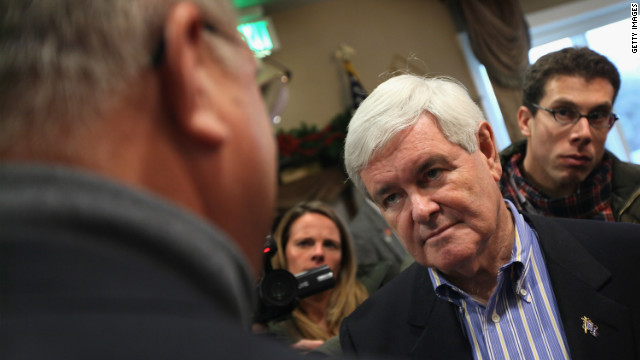
Newt Gingrich during a campaign stop at the Dubuque Golf and Country Club in Dubuque, Iowa, on Tuesday.
  • The Iowa caucuses are less genteel than ever before, David Yepsen says
  • More voices are being heard at the caucuses, but some are increasingly hostile, he says
  • Yepsen: Iowa's tradition of civility is challenged by hecklers, protesters and Internet negativity
  • Come 2016, candidates may conclude Iowa's just not worth it any more, Yepsen says

Editor's note: David Yepsen, a former political reporter for The Des Moines Register, is the director of the Paul Simon Public Policy Institute at Southern Illinois University Carbondale.

(CNN) -- In 1979, George H.W. Bush was giving a foreign policy speech to a group of Iowa Republican caucus-goers when a British journalist, well into his cups, shouted "Rubbish! Rubbish!" at the former U.N. ambassador from the back of the room.

Joseph Kraft, one of America's leading political columnists, frowned at his well-soaked colleague and said, "Shhh. We don't do it that way here." The man nodded, and Bush smiled and proceeded with his address.

Things have changed at caucus time in Iowa. It's a whole lot less genteel than ever before. And that may not be good for the future of the caucuses.

For several cycles now, caucus events have grown ever larger, with more money being spent and media attention being generated. But the biggest difference is the level of surliness.

David Yepsen

Americans on both the left and the right are angry and frustrated. Many have reached snapping points. Upset about being ignored by a political process that won't do things they want done, their solution is to raise their voices and adopt guerrilla theater tactics to force their way into the debate.

Growing numbers of websites, bloggers and YouTube videos help define the coverage in ways that didn't exist a cycle or two ago. At one level, that's a healthy use of the First Amendment. There are more voices being heard.

At another level, it's not so good. Some of these voices lack civility and employ increasingly hostile tactics in an effort to garner media attention. If this sort of thing keeps up, it could contribute to the demise of the caucuses and an end to the up-close campaigning that has been a hallmark of caucus campaigns.

Newt Gingrich and the chocolate factory
Wife talked Romney into second run
Ron Paul in the spotlight

To be sure, American political campaigns have never been very genteel affairs. They seem even less so today thanks to communications technologies that enable the campaigns' negativity to be spewed into living rooms and hand-helds on a constant basis.

In Iowa, the state's tradition of civil politics is being challenged by hecklers, protesters and Internet negativity, along with record amounts of last-minute attack television ads from unknown sources.

Early signs of it came in 2010, when some tea party activists verbally challenged Iowa candidates. On top of that was the Citizens United Supreme Court decision, which has poured the gasoline of unattributed campaign donations onto these fires of negativity. Next was hackers threatening a cyber attack on the caucus results to destroy the reporting of the vote. Now, the Occupy movement is arriving in Iowa to use the events as a backdrop for their protests.

(Stay tuned. This could get interesting in the coming days. When some Occupy protester from out of state gets in the face of an NRA supporter at a caucus, things could turn ugly. Despite the best efforts of cooler heads on all sides, the storyline on caucus night may not be who wins but the outcome of any Occupy vs. tea party confrontations.)

Add this all up, and it's easy to see why it could contribute to the demise of the caucuses. Already we've seen some members of Congress reduce the numbers of town hall meetings so as not to have ugly scenes with hecklers -- and to limit the opportunities for opposition trackers to capture them in gaffes that will live forever on the Internet. At many caucus events, there are also more security people than ever before, judging by the increased numbers of thick-necked fellows with wraparound sunglasses and plastic earpieces.

Come 2016, candidates may conclude that Iowa's just not worth it anymore. They may figure they are better off just raising more money in closed-door fundraisers and doing invitation-only telephone town hall meetings.

It's not hard to see why. The caucuses became important because candidates like George McGovern, Jimmy Carter and George H.W. Bush felt they got something out of participating. Candidates in the future may no longer feel that way, because the caucus events have moved a long way from the days when Carter munched lemon bars in someone's kitchen.

The opinions expressed in this commentary are solely those of David Yepsen.

Source: http://rss.cnn.com/~r/rss/cnn_topstories/~3/_hb4-Q7_9Gg/index.html

bbc latest news bbc world news bbc pacific news bbc asia online bbc europe online bbc news live

Crayfish invasion of England's waterways tracked by radio

North American predators move upstream at 500m a month, spreading disease to native species, Environment Agency finds

Members of an aggressive species of crayfish which have been invading England's waterways are being tracked with radio transmitters in an attempt to better understand them.

The Environment Agency said virile crayfish (Orconectes virilis), which are non-native, prey on native wildlife and spread crayfish plague, a disease deadly to native white clawed crayfish. The north American predators have recently been seen in waterways in east London after first being found on the river Lea near Enfield in 2004.

They have since colonised more than 10 miles of the river and linked waterways, spreading into Hertfordshire.

The agency has fitted small radio transmitters on the backs of the unwelcome guests, with preliminary results showing that virile crayfish are moving upstream at a rate of 500 metres a month.

This is substantially faster than their cousin, the signal crayfish, which is also non-native.

The UK's only native crayfish, the white clawed crayfish, was wiped out along the Lea after an invasion of the signal crayfish in the 1980s and the associated spread of crayfish plague. The plague is a fungal infection that can be easily spread between rivers on wet angling gear and water sports equipment.

Adam Ellis, environmental monitoring officer at the agency, said: "Whilst rivers in England and Wales are cleaner than they have been for decades, there is still a lot to be done in order to return them to full health. This includes the control of invasive species like virile crayfish.

"By tracking the colonisation of the river Lea by virile crayfish, we will better understand how this species impacts the environment and our native wildlife.

"However, one of the most important ways to protect our wildlife is to stop the spread of non-native invasive species. We're appealing to the public not to release unwanted pets into the wild."

Anyone who catches a crayfish must follow strict guidelines on how to handle them to prevent their spread and the transmission of crayfish plague.

It is believed that virile crayfish arrived in the UK after an aquarium owner released them into an east London pond.

The rise of invasive species is a challenge in meeting tough new EU targets on the ecology of rivers and lakes. They cost the UK economy an estimated �1.7bn a year, according to the agency.


guardian.co.uk © 2011 Guardian News and Media Limited or its affiliated companies. All rights reserved. | Use of this content is subject to our Terms & Conditions | More Feeds

Source: http://www.guardian.co.uk/environment/2011/dec/30/rivers-crayfish-invasion-radio-tracking

bbc news radio bbc news persian bbc news arabic bbc news radio bbc news online bbc news

Letters: Labour is working to avoid the trap

Ben Jackson and I were disappointed to see our Comment piece (How to avoid the Tory trap, 29 October) and Policy Network pamphlet, Cameron's Trap: lessons for Labour from the 1930s and 1980s, reported online (29 December, Politics section) under the headline "Ed Miliband risks Tory trap on public spending, says shadow minister". This is narrowly inaccurate as I did not say that. More widely, it mischaracterises our argument. The Comment piece makes clear our view that Ed Miliband is strategically positioning the Labour party to avoid the "trap". That is why we say in the article that the key political moment of this parliament has been Ed Miliband's focus on the "squeezed middle".

In addition, if you examine the recommendations made in our pamphlet, it is obvious how much work has already been done by the leadership of the party to get Labour on the right side of the argument. By succumbing to the temptation to sensationalise our argument, the Guardian is not encouraging the development of progressive policies.
Gregg McClymont MP
Lab, Cumbernauld
Dr Ben Jackson
University College, Oxford


guardian.co.uk © 2011 Guardian News and Media Limited or its affiliated companies. All rights reserved. | Use of this content is subject to our Terms & Conditions | More Feeds

Source: http://www.guardian.co.uk/politics/2011/dec/29/labour-working-to-avoid-trap

bbc latest news bbc world news bbc pacific news bbc asia online bbc europe online bbc news live

Thursday, 29 December 2011

Your pictures: Floral

Readers' pictures on the theme of floral

Source: http://www.bbc.co.uk/go/rss/int/news/-/news/in-pictures-13346267

bbc news live bbc news somali bbc news world the bbc news bbc news live stream bbc news usa

OK, if the French play up, the croissant gets it | Alex Clark

If Britain has to cut ties with its former conquerors, there's a lot we'd miss. But some things we wouldn't

Heavens! Or even Mon Dieu! Is this really the appropriate time of year for a contretemps, let alone a brouhaha? Well, apparently yes, as the age-old antipathy between France and Britain rears its jolly old t�te once again. But rather than get into an ugly scene, I wonder if it wouldn't be simpler to do a quick audit of what we'd actually miss if we had to cut all ties with our former conquerors, and what we'd quite happily do without. Just in case we want to get really serious and indulge in a boycott of things French, you understand. These are, of course, merely my suggestions, so do feel free to join in; we're totally laissez-faire around here.

Thank goodness next summer we'll have significant sporting events to focus on, both here and in Poland and Ukraine. Otherwise I would pine for the Tour de France, that annual celebration of mountain-top lunacy, in which one can flash one's vocabulary ? peloton, poursuivants, lanterne rouge ? with gay abandon.

Switching sport, it's barely possible to contemplate a world without Thierry Henry, but I think north London can pretty much claim him as its own now. And I have immediately reclassified Ars�ne Wenger as Alsatian. Let's face up to it straight away: the French have made a fairly hefty contribution to the world of booze, and it will be a wrench to say adieu to champagne, calvados, claret, chablis, cognac and other drinks that begin with C. Don't even get me started on cointreau. But needs must: we will have to muddle by on prosecco, chianti and Jagermeister, possibly all in one marvellously potent cocktail.

Au revoir, too, to �clairs, choux buns and meringues, but ? and this might be controversial ? I'll be relieved to be free of the tyranny of the croissant. Ever since the recent BBC television hit The Great British Bake Off (there's a clue in the title, guys), revealed that it takes virtually one's yearly consumption of butter and a week of rolling-pin action to make a tiny scrap of breakfast that isn't even a bacon sandwich, the charm of these overrated buns has been lost on me. They also encapsulate one of the aspects of French life that most gets on our nerves: agricultural surplus meets too much time on your hands and produces a culinary fetish object. Staying briefly in the kitchen: jus out! Gravy in!

Now: sex. The French are the greatest lovers in the world. Whatever. Paris is the city of love. If you say so, monsieur, but rather less so since the advent of cheap flights to Scandinavia. And here's one for the fashion-conscious: won't you be glad that you'll never again have to hear that only French women know how to wear a scarf? Fortunately, there is very little to say about French popular music. We will happily note that we can delete the post-Gainsbourg stylings of Air, always cited in arguments as "the good French band", from our iPods and move on. We will enthusiastically rediscover Plastic Bertrand, which will annoy everyone, because he is, of course, Belgian.

Enfin, there remains the difficult category of things that sound French, but might on closer inspection turn out not to be. Here we must exercise some caution. So: French polish, windows, letters, beans, Connection, kissing, toast, poodles, Lieutenant's Woman, navy and knickers, consider yourself on a warning.

And don't think we haven't spotted you, Dawn French.


guardian.co.uk © 2011 Guardian News and Media Limited or its affiliated companies. All rights reserved. | Use of this content is subject to our Terms & Conditions | More Feeds

Source: http://www.guardian.co.uk/commentisfree/2011/dec/18/alex-clark-living-without-france

bbc europe online bbc news live bbc news somali bbc news world the bbc news bbc news live stream

PICTURES: Spider webs cocoon trees

Have a look at this amazing side effect from last year's Pakistan floods: trees completely cocooned in spiders' webs.

Source: http://news.bbc.co.uk/go/rss/int/news/-/cbbcnews/hi/newsid_9440000/newsid_9443200/9443220.stm

bbc tv news bbc news live video bbc news europe bbc news russian bbc news home page bbc news online radio

Frankincense trees' bleak future

Frankincense - a traditional staple of the Christmas story - faces an uncertain future, according to researchers studying the changing ecology of the trees.

Source: http://www.bbc.co.uk/go/rss/int/news/-/news/science-environment-16270759

bbc news persian bbc news arabic bbc news radio bbc news online bbc news bbc middle east

Seeds survive being eaten twice

How seeds survive when the lizards that eat them are eaten by birds

Source: http://www.bbc.co.uk/nature/15838840

bbc news arabic bbc news radio bbc news persian bbc news arabic bbc news radio bbc news

Wednesday, 28 December 2011

To avoid a return to the 1930s, Europe need the postwar spirit

When peace returned, debts were forgiven and a long-term loan programme was put in place? for Germany. Something of a similar order is required for the ailing countries of the eurozone

There was exultation in the French embassy in London last weekend. Thanks to David Cameron's handling of the Brussels summit, the French were able to attack the British prime minister for his obsession with the interests of the City, as opposed to the economic future of Europe, while secretly praising him for doing President Sarkozy's dirty work for him.

Despite the general perception in the run-up to the summit that the Germans were calling the shots and that France was losing influence, Cameron ensured that, for the moment at least ? and it may be many moments ? the French have won in the battle over whether the key structure for the eurozone should be the German version of binding, supranational arrangements in the hands of the Brussels commission, or the more flexible, intergovernmental approach favoured by the French.

However, in the light of the general reaction of the markets, this may be small consolation when it comes to the battles that lie ahead.

To my mind, reaction to Cameron's veto (or non-veto) has been little short of hysterical. Those of us who recall France's "empty chair" policy towards what was then the European Economic Community in the 1960s know that these things do not necessarily last. Anyone of a hysterical turn of mind would be far better advised to worry less about Cameron's behaviour than about the looming world economic crisis.

In a recent University of Warwick paper, Political Quarterly editor Colin Crouch observed that the big worry of economic policymakers used to be the labour movement, but is now capital movement. And as the chief executive of the giant bond investor Pimco recently put it, the financial crisis is such that, whereas investors used to be concerned about the return on capital, they are now more interested in the return of capital. My suspicion is that, if that was meant to be a joke, he was speaking only half-jokingly.

Now, seasoned bureaucrats and central bankers tend to start counting the spoons when their democratically elected masters complain about the behaviour of the financial markets. You cannot, it is fondly believed, and as a famous British prime minister once put it, "buck the market". On the other hand, when the market is distorted, or behaving in a way that is not manifestly conducive to the general welfare, then some attempts have to be made to control its behaviour.

That is why the British position ? that the system that produced the crisis should continue to be lightly regulated and lightly taxed ? sticks in the craw not only of continental politicians but also of many British citizens.

In the world of casino capitalism, where the amount of so-called "trading" ? ie rampant speculation ? far exceeds the value of transactions needed to finance ordinary trade, the pace is set by a relatively small number of very powerful "players" ? yes, they call themselves "players" ? in the bond market. Many of these have, not to put too fine a point upon it, been "going" for one eurozone economy after another. The argument in their favour is that, although their own motives may be less than pure, they are, in an Adam Smithian way, forcing governments to mend a faulty system.

Unfortunately, week after week, it has become evident that European, and indeed world, policymakers constitute a cacophonous orchestra without a conductor. More and more economists and interested laypeople are concerned, with reason, that we are heading back towards a 1930s-style crisis, albeit at a considerably higher starting point when it comes to living standards (although these are, indeed, already beginning to fall, except in the case of ? well, in the spirit of Christmas, let us not name names or categories).

In reaction to the 1930s, the Americans and the British got together, with a little help from their friends, to produce the postwar Bretton Woods system, which was essentially aimed at limiting the excesses of the financial markets. This broke down in the early 1970s. In a sense, the present crisis of the eurozone is the culmination of the various piecemeal efforts to substitute for the Bretton Woods system.

The essence of the problem today is that the banking crisis ? and the sovereign debt crisis that is to a considerable extent the consequence of the financial crisis ? cannot be patched up for long with financial sticking plaster.

After the second world war, the Organisation for European Economic Co-operation, the OEEC, which subsequently evolved into the OECD, conducted a remarkable amount of long-term planning. Germany and Austria were recipients of massive "debt forgiveness" and received very long-term loans. The former Austrian politician Hannes Androsch recalls that it was not until 1975, when he was finance minister, that his country paid off a loan made in 1952. Similarly with Germany. And the British postwar loans from the US were not paid off for half a century.

Serious long-term arrangements of this order are now needed. But without a return to Keynesianism, the crisis will only get worse. Yes, we need long-term budgetary restraint, as advocated by Merkel. But we are not faced with Weimar inflation. We are faced with rising unemployment and goodness knows how many recipes for social unrest. We need not the wartime spirit, but the immediate postwar spirit. Fast!


guardian.co.uk © 2011 Guardian News and Media Limited or its affiliated companies. All rights reserved. | Use of this content is subject to our Terms & Conditions | More Feeds

Source: http://www.guardian.co.uk/business/2011/dec/18/avoid-slump-1930s-postwar-spirit

bbc news world the bbc news bbc news live stream bbc news usa bbc welsh news bbc tv news

Dan Wagner: from dotcom Dial-a-dog to Venda vendor

The man who presided over the notorious collapse of the Dialog technology company has something new to sell

Were you around during the 1990s dotcom boom? Then you ought to know the name Dan Wagner.

Wagner was famed for insisting on wearing a Donald Duck waistcoat as much as for his achievement of becoming a chief executive of a public company in his 20s, and for a confrontational reputation while presiding over a firm whose shares crashed by 95%.

"I had quite a lot of coverage, not all welcome," admits the former boss of Dialog, the technology company that City wags renamed Dial-a-dog. "It was partly because I spoke my mind, which is not always a good trait in a public company chief executive."

Now he's back ? at least back trying to get into financiers' good books ? and dressed in a sober suit and slicked back hair, the 48-year-old suddenly looks far more City-like. "I have been 10 years in the private [company] sector," he adds. "It feels like about the right time to come back out again."

The reason, obviously, is he has something to sell. That something is his e-commerce business Venda, built from the technology that Wagner bought for �250,000 out of the ashes of one of the most famous dotcom busts of all ? fashion retailer Boo.com. The entrepreneur holds a near 30% stake and Venda is up for sale, either via a flotation or to a trade buyer. Mind you, that has been true for years.

In 2008 Venda recruited former Orange and Wanadoo executive Eric Abensur and said it would float. It didn't. "The whole world changed," Wagner protests, before switching back to the script. "Venda is doing well in the US. It is a good thing for Britain. This is a buyers' market. We may not do anything. We are not desperate. We don't need to sell."

It is a convincing piece of sales patter, which probably disguises what a slog it's been to get this far. Venda's last accounts show the company lost �5.1m before tax in the year to June 2010, an improvement on the previous year when it lost �7.3m. About 23% of the group's �10.5m revenues came from the US, and there is a caveat to Wagner's cool "don't need to sell" line.

Two months ago the company raised $2.25m (�1.4m) issuing 5.5m new preference shares to existing investors. The documents, dated 15 September 2011, state: "If the company has not completed a qualified IPO or effected a liquidation event one year after issue of [the new shares], then the holders of the [new shares] are entitled to receive a compounding dividend of 10% per annum."

So why pay so much for so little cash? The money has been raised to promote the company in the US, where Venda has just won a contract to supply Fort Knox that will be worth $6m in the first year (and possibly a lot more afterwards).

The high interest rate, Wagner says, will provide the company with an "incentive" to sell by September. But as existing shareholders are putting up the funds, it suggests somebody is very keen to cash out. Did Wagner push for the high rate? He won't say.

He may just want to move on and even talks of a sensational return to the public markets by putting his other businesses into a holding company and floating that.

The new projects are all internet-focused. There is Locayta, which profiles visitors to websites; Powa, that allows businesses to quickly and securely deploy hundreds of e-commerce sites; Buya Powa, a group buying start-up; and Aigua, a fashion blog publishing company.

"Everything I have has got an A on the end," Wagner says. "I'm thinking of changing my name by deed poll to Dan Wagna." Now, even his City detractors must concede that's not such a bad joke.


guardian.co.uk © 2011 Guardian News and Media Limited or its affiliated companies. All rights reserved. | Use of this content is subject to our Terms & Conditions | More Feeds

Source: http://www.guardian.co.uk/business/2011/dec/18/dan-wagner-venda-internet-business

bbc news radio bbc news online bbc news bbc middle east bbc latest news bbc world news

Cameron: over-confident, cavalier and careless? and still on top | Andrew Rawnsley

The prime minister hasn't had a brilliant 12 months, but there's no one that can rival him inside or outside his party

His economic strategy has gone up in smoke and so have crucial relationships in Europe. Violent urban disorder erupted on his watch over the summer and scandal forced the resignation of a key member of the cabinet in the autumn. The northern part of his kingdom is threatening to break away. His closeness to senior members of the Murdoch empire has been a serial, personal embarrassment. On a core element of the government's domestic programme ? the NHS legislation ? the prime minister has been forced into reverses which cost political capital without doing anything to reduce the risk that it will turn into a terrible mess.

And yet David Cameron ends the year on something of a high. His backbenchers greeted his return from Brussels with a hero's welcome. He may eventually come to rue raising expectations that he cannot ultimately fulfil, but for the moment he has won what one influential Tory MP calls "a breathing space" with his party during which "we will get off his back about Europe". He squelched Ed Miliband at the last Prime Minister's Questions of the year. Despite a bleak economic outlook, accompanied by the worst unemployment figures in 17 years, some polling has the Conservatives nudging ahead of Labour. The languishing Lib Dems are reduced to sighing with relief when they can just squeak a third place in a byelection. Giddier Tory MPs can even be heard speculating about engineering a snap general election. That is silly chatter, but the fact that it is talked about at all is indicative of the state of play as we come to the close of this turbulent year: David Cameron is on top.

This is not because the prime minister has had 12 months which deserve the description brilliant. In many respects, it has been a year which has exposed a variety of flaws, limitations and contradictions in both his personal style and political strategy. The "big society", which was once to be his governing theme, is rarely heard of these days. Even he appears to have given up making speeches trying to sell it. His premiership is becoming defined by austerity and Europe, the opposite of what he originally intended.

Yet he remains ascendant. That is because all politics is relative. One reason he seems to be in a good place for a prime minister is because international rivals and domestic competitors are in much worse ones. He leads a government which looks unusually robust when set beside many others. Rancour between Tories and Lib Dems is as nothing compared with the poisonous divisions in the US where government is paralysed by the deadlock between the White House and an obstructionist Congress. Whatever its faults, Britain's coalition can pass a budget and enact legislation. Greece and Italy have "technocratic" governments ? in other words, governments that no one voted for ? imposed on them by the failure of conventional democratic politics and the terror of the bond markets. I have lost count of the number of summits at which Nicolas Sarkozy and Angela Merkel met to resolve the euro crisis and then failed to do so.

George Osborne has been forced to rewrite his deficit reduction strategy, an event that ought to be a humiliation for a chancellor. A mere 18 months after he vaingloriously proclaimed that he would have the job done in a parliament, he now promises a diet of gruel into the foreseeable future. But the markets have continued to tolerate the size of Britain's debts, and most voters continue to buy the prime minister's excuses, because this government seems more decisive and stable than most.

On the domestic front, too, David Cameron is flattered by comparisons. He basks in the reflected failure of others. After Ed Miliband's latest belly flop, one Tory MP, not normally a cruel man, chortled to me that the Labour leader "is the gift that keeps on giving". Labour is having a renewed bout of jitters about its leadership and long-term prospects without evincing any serious sign that it knows how to enhance either.

The Lib Dems are furious but trapped. Nick Clegg only learnt of the denouement of the Brussels summit in a four-in-the-morning call from David Cameron after the fact. Many Lib Dems see this as the second serious betrayal of the year, the first one being Mr Cameron breaking a "gentlemen's agreement" over the conduct of the AV referendum when he licensed the "No" campaign to launch personal attacks on the Lib Dem leader. Lesson for Mr Clegg and his party: if you are going to strike a "gentlemen's agreement" be first sure that the other party is actually a gentleman. Angry as they may be, the Lib Dems have nowhere to go when collapsing the coalition and triggering a sudden election would be the proverbial turkey voting for an early Christmas.

No figure within his own party has the stature or popularity to threaten David Cameron at present. He is not constantly menaced by an internal rival in the way that Tony Blair was by Gordon Brown.

This is not entirely healthy because it exacerbates an already established tendency to be complacently insouciant at times. He has shown himself to be cavalier and careless: at home over the NHS reforms and abroad when he failed to cultivate any allies before the Brussels summit. In a speech on Friday, the prime minister called himself a "vaguely practising" Christian. Senior civil servants and colleagues sometimes wonder whether he is not also a "vaguely practising" prime minister.

On other occasions, he has shown a capacity to rise to events with clarity and boldness. He took a riskily forward position in the early stages of the Libyan crisis, insisting that a UN mandate for action could be secured when many doubted it and pushing for military intervention against considerable initial resistance from both other governments and his own officialdom and military.

To Tories of a Eurosceptic bent, which is to say nearly all of them these days, his other demonstration of boldness was to say no to a new European treaty. This is much more arguable. It was a decision not so much willed as forced upon him by the refusal of every other European leader to indulge Britain's demands and the pressure from his MPs, 81 of whom had earlier rebelled over a referendum on withdrawal, and many more of whom were with the mutineers in spirit if not in the division lobby.

One theme that has emerged over the past 12 months is that David Cameron is not very good at relationships; certainly not at some kinds of crucial relationships. He has mismanaged both his footsoldiers at home and his international peers. It is admittedly not easy to deal with Nicolas Sarkozy ? a volatile grandstander facing a difficult election within months and desperate to divert attention from his own failures and predicaments by abusing the ros beefs. But Mr Cameron ought to be asking himself why he has not got a better relationship with someone as ideologically sympathetic as Angela Merkel and how it was that he found himself without a friend in the room at the Brussels summit. European leaders who normally prefer the British to the French found the approach of Team Cameron arrogant in its assumptions and aloof in its diplomacy.

This, interestingly, echoes the complaint you often hear back home from within his own party. I have spent more lunches and dinners than I care to remember listening to Tory MPs complain about how remote they feel from their leader, often getting on to the subject before the first glass of wine. Now, it is only fair to observe that I have never known a time, whether the prime minister was Tory or Labour, when MPs didn't moan that they were unloved by their leader, especially when the MP in question felt that his talents had been overlooked for a ministerial post. Sensible leaders do something about it. Tony Blair found buttering-up backbenchers a bore so he employed people at Number 10 whose job it was to do it for him. There seems to be no one in David Cameron's Downing Street tasked with party management. Many a Tory MP has a bitter anecdote about an occasion when they or a colleague have felt snubbed by the prime minister or cold-shouldered by his operation. "It will be his downfall in the end," one Conservative MP remarked to me recently.

"Out of touch" and "arrogant" are also the words most often to be heard from focus groups of voters when they are asked to discuss what they don't like about this prime minister. This is not necessarily fatal so long as it is balanced by things they admire. It is certainly better for a leader to be regarded as too confident than the opposite. Similar complaints of arrogance were made about Tony Blair and Margaret Thatcher and both won a hat trick of elections before they were finally undone. For now at least, David Cameron's approval and leadership ratings easily best those of his rivals. "He's not that good," says one senior Labour figure who despairs of his party's failure to capitalise on the coalition's many difficulties. "But Cameron doesn't have to be that good against us."

In politics, you don't need to be the best. You just have to be better than the rest.


guardian.co.uk © 2011 Guardian News and Media Limited or its affiliated companies. All rights reserved. | Use of this content is subject to our Terms & Conditions | More Feeds

Source: http://www.guardian.co.uk/commentisfree/2011/dec/18/david-cameron-ed-miliband-tory

bbc news home page bbc news online radio online bbc news bbc news streaming bbc news arabic bbc news radio