Sunday, 31 July 2011

Britons warned to respect Ramadan while holidaying in Dubai

Foreign Office says Islamic holy month means that tourists in the Gulf emirate should be mindful of obeying local laws and customs

The Foreign Office has warned Britons holidaying in Dubai this summer that eating, drinking or smoking in public during Ramadan could land them in prison.

In new guidance, published to coincide with the Islamic month of fasting that starts today, it says "failure to comply" with local laws "could result in arrest" and that "discretion should be exercised" even in the case of young children, pregnant women and nursing mothers. Dubai police have said that non-Muslims will receive one warning before arrest.

The Foreign Office advice reads: "Do not eat, drink or smoke in public view during the daytime (including in your car). This is considered highly disrespectful. It is also against the law and failure to comply could result in arrest. Pregnant, nursing women, and young children are exempt from the provisions, but discretion should be exercised.

"The majority of eating and drinking establishments will be closed during daylight hours, but you can find some coffee houses with screens that are intended to allow people to eat during the daytime away from public view.

"Be careful about your dress during Ramadan. Skimpy clothes should not be worn at any time in the UAE, but during Ramadan the standards may be policed even more carefully than usual."

Its "British Behaviour Abroad" report, based on consular statistics, found that of the 20 countries in the world with the largest British expatriate populations, Britons were more likely to be arrested in the UAE than in any other country covered in the report except Thailand.

"This is largely because the UAE laws and customs are very different to those in the UK. There may be serious penalties for doing something that might not be illegal in the UK," said the Foreign Office. Last month a British woman living in Dubai was fined AED3,000 - around �497 - for insulting Islam on Facebook.

Sean Tipton, from the Association of British Travel Agents, recommended that holidaymakers study the Foreign Office advice.

He said: "In addition, we will be reminding ABTA members who sell trips to the UAE to signpost their customers to this information. However, whilst we fully understand and appreciate the importance of Ramadan, we would strongly recommend that the Dubai authorities practise these enforcement measures with a degree of sensitivity and discretion so as to avoid causing unwarranted distress to foreign visitors and the risk of significant damage to their tourist industry."

Major hotels in Dubai are also working to help their guests stay within the law. The Jumeirah Group, which runs a number of properties including the distinctive Burj Al Arab, is issuing a new booklet "to communicate to non-Muslim guests the etiquette surrounding such an important religious time". The group said it normally issued guidelines but did not "actively promote" them as Ramadan was an annual event.

Although scorching temperatures of 45C (113F) and above will see a lull in Dubai's tourist trade during August, tens of thousands of Britons are still likely to flock to its beaches and shopping malls.


guardian.co.uk © Guardian News & Media Limited 2011 | Use of this content is subject to our Terms & Conditions | More Feeds

Source: http://www.guardian.co.uk/uk/2011/jul/31/dubai-tourists-must-respect-ramadan

bbc welsh news bbc tv news bbc news live video bbc news europe bbc news russian bbc news home page

Kwasi Kwarteng: The rising star of politics and letters | profile

With a glittering CV and three books out this summer, the MP is tipped for a brilliant career, even being the first black Tory cabinet minister

'If I want to read a book, I write one," said Benjamin Disraeli, the first political "outsider" to become Tory prime minister. Few of those to follow Disraeli into the House of Commons over the last century and a half can have taken that Victorian lesson to heart as strongly as Kwasi Kwarteng. That the new MP will have no fewer than three books coming out in the space of a month, just a year and a half into his parliamentary career, suggests that this self-styled "black Boris" (as in Johnson) also sees scribbling as a route to the top of the greasy pole.

Kwarteng is often said to be a very different type of Tory, though this is almost entirely due to his Ghanaian parentage. In most respects, his background is as traditional as it gets, his path from Eton through Cambridge resembling the histories of the imperial administrators whom he sketches in his new book Ghosts of Empire, to be published by Bloomsbury next month.

Kwarteng's father was educated in what was then called the Gold Coast, in a leafy Anglican school emulating the English public school, down to its Winchester-educated English headmaster, becoming an administrator of post-imperialism as a Commonwealth Secretariat economist. Kwasi, born in London, was sent away to board at prep school at eight. "Probably too young, but I loved it," he has said.

As his book revisits the Victorian confidence which made the empire, its author has rarely been thought short of confidence himself. "Scholars' house at Eton was a competitive intellectual hothouse," said one contemporary. "But everyone said that probably the greatest brain of the lot was the guy with the extraordinary name." Kwarteng's interview at Trinity College, Cambridge, became the stuff of an oft-retold Eton school legend. A relatively young tutor ended a slightly nervy interview by mentioning that this was his first time interviewing entrance candidates. "Oh, don't worry, sir, you did fine," smiled the 18-year-old Kwarteng reassuringly.

He proved less unflappable as a University Challenge contestant two years later, swearing: "Oh fuck, I've forgotten" after buzzing in. Somehow it was missed by the production team. Cue viewer complaints and a starring role for Kwarteng in a "Rudiversity Challenge" news story on page three of the Sun no less. It proved a very minor glitch. Kwarteng's friends were not surprised when the college quiz quartet ended the series as national champions, another accolade for this habitual acquirer of school and university prizes. But Kwarteng's reputation was as a rather personable swot, enjoying arguments over the dinner table, combining charm with the impression of being better read than everybody else.

After a masters as a Kennedy scholar at Harvard, and a Cambridge PhD in economic history, he went to work as a fund manager, but the scholarly bug still bit. Ghosts of Empire seems unlikely to join a recent fashion for historical pro-empire boosterism. Kwarteng is billed to speak in a London debate this autumn against the motion that "Britain's former colonies should stop blaming the empire for their ills", the Tory MP taking what would traditionally be the left's line. Kwarteng's instinctive position is on the fence of such a polarised debate, less interested in "good thing" versus "bad thing" polemics about empire and more in the value of studying how we became the societies that we are today.

"This is his first book," says Bloomsbury's jacket and publicity material preparing for the 15 August launch. But it may take a photo-finish to verify that. In its riverside offices last week, rival publisher Biteback received the first copies of another Kwarteng tome, Gridlock Britain, a wonkish polemic about Britain's transport problems. Kwarteng, a member of the transport select committee, believes in markets rather than integrated planning and demands road pricing on the eyecatching ground that tax-funded free roads represent the last gasp of "socialism".

On the very same day that his other new book was winging its way to Kwarteng, the MP's office was submitting, just a few days late, the manuscript of After the Coalition, a book with which seven members of the Tory class of 2010 will seek to make the party conference weather this autumn. He has been a key player behind the book, alongside Liz Truss MP; he pitched the book for publication and has been the point man in its co-ordination.

Kwarteng is economically "dry", but his politics are less clearly defined than others in the group, such as the independent-minded rightwinger Priti Patel or the formidable lawyer Dominic Raab. (Charlie Elphicke, Brandon Lewis and Chris Skidmore, another historian, complete the group). Unusually, all seven MPs will claim joint responsibility and do not plan to reveal who has written which chapter, in an attempt to pitch a coherent manifesto.

It is a calculated gamble. Those who present themselves as the voice of a new generation must have plenty to say. They want to talk to their own party about the radical reforms they might attempt without those pesky Lib Dems to placate, though Kwarteng will be among those keeping an ambitious eye on the Downing Street reaction.

There is nothing new about a non-white Conservative MP. In 1895, Sir Mancherjee Bhownagree won Bethnal Green with a strongly pro-empire pitch. But it took a century to elect his successors. Beyond Nirj Deva's brief spell in Parliament after 1992, it took two Conservatives of Asian origin breaking through in 2005 to diversify the all-white benches. David Cameron has been eager to promote proof that the party has changed, but MPs worry about being pigeonholed by tokenism. The answer to this conundrum has been strength in numbers. After the 2010 election, there are no longer two non-white Tory MPs but more than a dozen, liberated to be able to strike a wide variety of approaches in engaging (or not) with race, and the range of issues that motivated each of them to enter politics. The declining novelty value may dampen the tendency to hail any black politician as our first black prime minister in the quest to identify a "British Obama".

Kwarteng cannot complain that his selection as a Tory candidate was reported with references to the "black Boris", since his own campaign team had enthusiastically propagated the label, his friendship with his fellow old Etonian featuring in his pitch to a "primary" selection meeting of 400.

Strength in numbers brings its challenges too. The Tory class of 2010 ? with nearly 150 new MPs ? is a great competitive hothouse, especially once MPs start thinking about boundary changes that will shrink the Commons.

Kwarteng has a little work to do to stand out in this highly talented cohort. Despite his multiple volumes, foreign affairs specialist Rory Stewart appears the most academically gifted, a mixed political blessing, while Louise Mensch has been the loyalist with the highest media profile.

Many new Tory MPs are remarkably confident in disdaining the traditional route of leadership loyalty. Few now see getting a junior ministry in an overcrowded coalition as a way to win definition in the party. Kwarteng has been a confident Commons performer, though some thought him a little too eager to assist the whips with helpful questions. More than a quarter of the class of 2010 have already rebelled against the whip, though Kwarteng has yet to blemish his loyalty copybook.

Is the "black Boris" tag that apposite? He is a more diligent character, keener on the library than the Bullingdon. "He reminds me more of Ken Clarke than Boris, with a confidence to argue any point in the Commons, whether you feel he believes it or not," says one MP.

Other contrasts may prove to Kwarteng's advantage too. Johnson has thrived as a directly elected London mayor but, like Ken Livingstone, struggled in the Commons, having been famous before he arrived.

Kwarteng has built an impressive reputation, trusted on the inside, though remaining off the radar of a surprising number of Westminster players. His habit of being seen in the tea rooms with grandees and senior MPs reminds one colleague of the quiet, assiduous networking of John Major. He is thought to have his eyes on the whips' office too, though publishing books is not the usual route in.

With such a crowded field wanting to be noticed as the voice of this Tory generation, a name to remember won't do any harm.


guardian.co.uk © Guardian News & Media Limited 2011 | Use of this content is subject to our Terms & Conditions | More Feeds

Source: http://www.guardian.co.uk/theobserver/2011/jul/31/observer-profile-kwasi-kwarteng

bbc news world the bbc news bbc news live stream bbc news usa bbc welsh news bbc tv news

Our pick of the week: The story, the stat, the quote, the tweet

Lanre Bakare on the people and stories in the media spotlight in the last seven days

The story

Blue-sky thinking

Steve Hilton's bizarre plans to boost the economy caught many unawares this week. The Financial Times revealed that David Cameron's shaven-headed strategist had some "blue-sky ideas" for the economy. The story could have come straight from an Armando Iannucci script, with the guru suggesting that the government should ignore European labour regulations by scrapping maternity leave and bin all consumer rights for nine months. Malcolm Tucker would no doubt have some choice (four-letter) words for Hilton's suggestions. Coalition HQ has plenty to mull over after the disappointing GDP figures, but they're probably not desperate enough to take any of Hilton's proposals too seriously ? yet.

The stat

66...

? confirmed wolf attacks have taken place on livestock in France so far this year. The rise of Canis lupus has caused controversy with pro- and anti-groups fighting over what should be done about them. Wolf expert Jean-Marc Moriceau said they could reach the forests just south of Paris within 10 to 15 years, but fear not, there is no threat of a British invasion.

The quote

Andrew Ainsworth

"If there is a Force, then it has been with me," proclaimed the Star Wars prop designer, who this week won a legal battle with Star Wars creator George Lucas over the right to sell replica Stormtrooper helmets in the UK.

The tweet

@tweetbox360

Tasteless tweeting came to the fore again this week after the death of Amy Winehouse. The Microsoft account was attacked after it urged fans of the star to "Remember Amy Winehouse by downloading the ground-breaking Back to Black over at Zune". An apology followed after fans bombarded the Twitter address with outraged messages criticising the opportunistic move.


guardian.co.uk © Guardian News & Media Limited 2011 | Use of this content is subject to our Terms & Conditions | More Feeds

Source: http://www.guardian.co.uk/theguardian/2011/jul/30/pick-of-the-week-blue-sky-thinking

online bbc news bbc middle east bbc latest news bbc world news bbc pacific news bbc asia online

British couple held in Afghanistan over suspected terror plot due home

Pair expected to return to UK on Saturday where they could be arrested or placed under surveillance

A British couple captured by special forces in Afghanistan and suspected of terrorist-related activities are expected to be returned to the UK on Saturday where they could be arrested or placed under surveillance.

The case remains highly sensitive because of the legal complexities involved. UK officials last night declined to comment.

The couple were seized by British special forces last week in the western Afghan city of Herat. They were transferred to what the Ministry of Defence called a "secure facility" in Kandahar where they have been held since.

Nato forces can hold suspects for up to four days before releasing them or handing them over to the Afghan authorities. However, the period can be extended "in exceptional circumstances". UK officials have made clear the man and the woman captured in a hotel in Herat constituted a special case.

The Foreign Office said at the time that suspects could be detained for more than 96 hours "in particular where it could provide information that could help protect our forces or the local population".

The couple were seized in what UK defence officials described as a joint operation with the Afghan intelligence service, the National Directorate of Security (NDS). However, the Afghan authorities insisted the operation was "UK-led".

Officials familiar with the operation called it "terrorism-related". A key question will be the nature of any evidence against the couple obtained by the British security services.


guardian.co.uk © Guardian News & Media Limited 2011 | Use of this content is subject to our Terms & Conditions | More Feeds

Source: http://www.guardian.co.uk/world/2011/jul/29/british-couple-held-afghanistan-due-home

bbc news usa bbc welsh news bbc tv news bbc news live video bbc news europe bbc news russian

Saturday, 30 July 2011

In bloom

Increase in jellyfish blooms could disturb the marine food chain

Source: http://www.bbc.co.uk/go/rss/int/news/-/news/science-environment-13647970

online bbc news bbc middle east bbc latest news bbc world news bbc pacific news bbc asia online

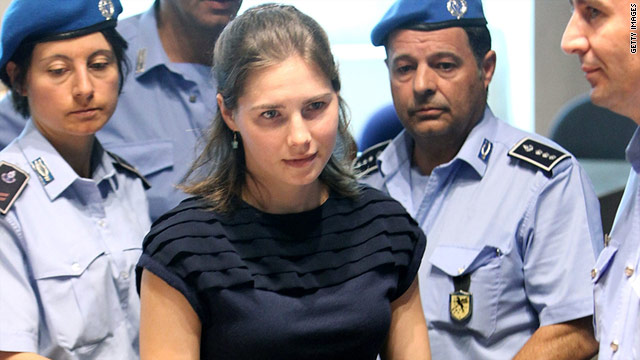
Forensics reviewed in Knox appeal

Amanda Knox and her ex-boyfriend were convicted of killing Knox's roommate, Meredith Kercher.
  • Experts criticize the handling of key evidence in testimony this week
  • Their testimony raises hopes among Knox's supporters that the appeal may succeed
  • Meredith Kercher, 21, was found dead in the apartment she shared with Knox
  • Knox, her then-boyfriend and another man were convicted and sentenced

Perugia, Italy (CNN) -- An Italian police forensic expert will give evidence Saturday as the appeal of American Amanda Knox against her murder conviction resumes in Italy.

Knox was convicted of killing her British roommate, Meredith Kercher, in the Italian city of Perugia.

Forensic expert Patrizia Stefanoni and her team examined DNA evidence during the original investigation in 2007.

Their work has been strongly contested by two court-appointed forensic experts, professors Carla Vecchiotti and Stefano Conti.

Is Amanda Knox closer to freedom?
Amanda Knox's appeal gets boost

Earlier this week, the professors argued that two key pieces of evidence in the conviction of Knox and then-boyfriend Raffaele Sollecito should have been considered "inadmissible."

Stefanoni, the police expert, is expected to question Vecchiotti and Conti on how they reached their conclusions.

She is also expected to use video and computer presentations to illustrate her points as she defends her team's work on the case.

Supporters of Knox, who arrived in court Saturday in a pink sweater and her hair tied back in a ponytail, hope that her conviction may be overturned or her sentence reduced on appeal.

Knox, 24, was sentenced to 26 years in prison for the murder of Kercher, 21, who was found partially naked with her throat cut in her bedroom of the house the two shared in 2007.

Sollecito and Knox were convicted on two key pieces of evidence: a 30-centimeter (12-inch) kitchen knife and a clasp from Kercher's bloodied bra.

Authorities testified in the original trial that Kercher's DNA was found on the blade of the knife, Knox's DNA was on its handle, and DNA from Sollecito was on the bra clasp.

But in the pair's appeal in Perugia, Vecchiotti and Conti have been damning in their appraisal of the methods used by the police forensic teams.

Testifying before the court Monday, the experts said the clasp had been kept in such a poor way that it was covered in rust, and further testing was futile. They both stressed that they had worn masks, gloves, paper suits and used sterile knives and scissors during their retesting at Rome's La Sapinenza University.

With regard to the knife, Vecchiotti said their test results were negative for blood and that the amount of DNA said to have been Kercher's was so low, it could not be examined again with any conclusion.

The two said that, studying the original report, it was clear that "numerous people had been in and out of the crime scene" and that "objects had been moved," which again put all evidence at risk of contamination.

In a point-by-point deconstruction, the experts said that because of the errors made by police during the original investigation, the evidence against Knox and Sollecito should be considered "inadmissible."

Kercher, a University of Leeds student from Coulsdon, Surrey, was discovered with her throat slit in November 2007, in the hilltop town of Perugia, just two months after she arrived in Italy during her year abroad.

A third defendant, small-time drug dealer Rudy Guede, an immigrant from the Ivory Coast, was also jailed in connection with the brutal killing. He received a 30-year sentence for murder and sexual violence following a fast-track trial in October 2008. His sentence was later cut to 16 years.

Knox and Sollecito -- who is serving 25 years -- were found guilty in December 2009.

CNN's Hada Messia and Nick Pisa contributed to this report.

Source: http://rss.cnn.com/~r/rss/cnn_topstories/~3/d32oxiq7HyE/index.html

bbc news live bbc news somali bbc news world the bbc news

Greek debt crisis and power plant explosion leave Cyprus on 'verge of economic collapse'

Island may need bailout following exposure to Greek banks and an explosion that hit the island's finance and tourism sector

Europe's debt drama has rippled across the Mediterranean to Cyprus. The country's beleaguered leader was scrambling today to form a government amid speculation that the island's ailing economy may soon need to be rescued by the EU.

Barely a week after EU leaders attempted to contain the crisis by agreeing to a new aid package for Greece, Cyprus has begun to show all the signs of fiscal contagion, with rising borrowing costs and an economy that has seen its credit rating downgraded.

"We are on the verge of economic collapse," said Ioannis Kasoulides, the island's former foreign minister and current MEP. "Unless serious structural reforms are implemented, we will face bankruptcy and need [a bailout] too."

Hopes of the crisis being nipped in the bud were crushed yesterday as President Demetris Christofias struggled to appoint a new administration.

Christofias' refusal to confront the island's tough trade unionists ? widely blamed for its profligate public sector ? appeared to be a major obstacle.

Until recently Cyprus was considered an "economic miracle". But the global financial crisis and a series of misfortunes have added to its woes. An explosion at a naval base on the island earlier this month left 13 dead and knocked out its main power plant, triggering daily blackouts that have severely affected the financial and tourism sectors on which it depends. Damage from the blast is estimated at ?1bn-?3bn (�878m-�2.6bn) and as much as 20% of gross domestic product.

With 19 months left in office, Christofias has come under heavy attack for the accident. The disaster occurred after a cache of explosives confiscated from a Syrian-bound Iranian ship were left out in high temperatures close to the power plant.

Downgrading the economy by two notches last week, Moody's said the blast caused "material damage" to the country's mid-term prospects. The agency said its growth would stagnate and cut its growth forecast to zero from 1.8%.

But it is the island's exposure to Greek banks that have generated the economic morass in which it now finds itself.

Citing the island's "increasingly fractious domestic political climate", Moody's also raised concerns over the disproportionately big role banks play in the island's economy. As an offshore haven, Cyprus has become the preferred destination for Russian oligarchs, in particular, to transfer huge amounts of wealth, with bank assets accounting for about 600% of GDP.

Cypriot banks are among the largest holders of Greek debt in Europe and Moody's has predicted that the country's capital, Nicosia, would be particularly exposed to a possible sovereign default in Athens.

Without a political resolution, Cyprus would not be able to push ahead with the urgent reforms it now needs, the agency added. "This adverse development increases risk to the government's plans, many of which will require not just cross-party support but also acceptance by trade unions," Moody's said.


guardian.co.uk © Guardian News & Media Limited 2011 | Use of this content is subject to our Terms & Conditions | More Feeds

Source: http://www.guardian.co.uk/business/2011/jul/29/european-debt-crisis-cyprus

bbc middle east bbc latest news bbc world news bbc pacific news bbc asia online bbc europe online

Why do we sneer at Sarko for trying to improve himself? | Catherine Bennett

No wonder the arts in this country are so undervalued when our leaders seem so determinedly lowbrow

It may be that a man who reads Kent Nerburn, David Cameron's favourite thinker, has no need of more, but for appearance's sake, if nothing else, it would be nice to think our premier is as well equipped as France's President Sarkozy, who recently embarked on a process of accelerated cultural improvement.

Conveniently, Cameron now has an entire summer in which to immerse himself in the classics, along with the complete works of Hitchcock and other important auteurs whose work Sarkozy likes to watch back to back. For more specific guidance, his fellow PR, Julia Hobsbawm, could be heard on the BBC's Today programme on Friday advertising a "bespoke service" for those who wish to remain au fait with cultural matters but lack the time.

The causes of Sarkozy's transformation remain mysterious. We can rule out European rivalry, Angela Merkel's tastes running more (like Mr Cameron's) to Midsomer Murders. On the domestic front, he certainly faces competition from Martine Aubry, the would-be socialist candidate, who has just promised, if elected, to increase the culture budget by 50%. But even without a spending pledge, Sarkozy's self-created reputation for vigorous philistinism was, for a long time, a gift to anyone who had ever read a cereal packet. As this group certainly includes his wife, Carla Bruni, is it possible that we are now witnessing her version of Pygmalion, with the president already said to be a credit to her bespoke service?

Given their scale, it could require some years of self-improvement before Sarkozy expunges from the record his previous offences against culture, some of them presumably designed to emphasise that his famous "rupture" from the French past was as much cultural, as in not being cultured like his predecessors, as it was political.

But to judge by Yasmina Reza's account of his campaign, L'aube, le soir ou la nuit (Dawn, Dusk or the Night), the populist clowning was more than an act. Asked if he might visit a museum on an official trip to Madrid, she records the obscene retort: "Merci. Le con te dit merci."

That as recently as 2009 Sarko was still pursuing a vendetta against a novel, La Princesse de Cl�ves, by Madame de La Fayette, is a measure of the speed, if not the profundity, of his renaissance. His grudge, I understand, was that studying this novel is pointless as well as stupefyingly boring: "I had a really hard time on her." Sales of La Princesse de Clves promptly soared, while the Sarkozy resistance sported badges saying: "I am reading La Princesse de Cl�ves."

Months ago, when the Hitchcock viewings must have been in full swing, the French academic H�l�ne Cixous was still denouncing Sarkozy's pronounced hostility towards this classic as, in itself, historically significant. "This brand of calculated barbarity should remain in the annals of French history. Just imagine an English potentate breaking the good news to the people: a ban on bloody tedious Robinson Crusoe cluttering the mind."

Yes, just imagine that. It isn't easy, given that most British politicians prefer to save literary chat for the closing seconds of Desert Island Discs, but what would happen if, say, David Cameron suddenly set his face against Robinson Crusoe? Or worse, complained that his friend Jeremy Clarkson totally agreed with him and that his other literary friend, Rebekah, has always thought it a bit on the lengthy side?

Maybe we can find a clue in the response to the news that Ed Miliband does not read anything at all, on the basis that novels are "all made up". Or in the equally nonexistent public revulsion occasioned, a few years back, by Gordon Brown's advertised hinterland. The former prime minister was so gripped by The X Factor that in November 2008, when the financial crisis was being compared with the Great Depression, he took time to write to the finalists. Daniel Evans, a bereaved 38-year-old swimming pool cleaner, was the object of special concern. "On a personal note," Mr Brown wrote, "can I say that the next time Simon says that you are only supported by the over-60s you can tell him that my wife Sarah and I disagree?"

The following year, he and the leader of the opposition clashed publicly over Jedward, who Brown disliked. "You only need to watch a few minutes," insisted Cameron, "and suddenly, 40 minutes later, you're still nailed to your chair, waiting for the terrible twins to appear." Of course, with his choice of Ernie (the Fastest Milkman in the West) as a desert island disc, Cameron had already signalled an intention never to be culturally undersold. ("This sounds more genuine than Gordon Brown's fatuous claim to like Arctic Monkeys," said the Sun.)

His choice of Hugh Fearnley-Whittingstall's River Cottage Cookbook as his desert island reading was also a challenge ? what next, the Boden catalogue? ? as well as being, you could now argue, intellectually consistent with leadership of a government that presides over collapsing libraries and museums. Perhaps, in the big society, Masterchef is to be all the stimulation we need. But no, according to Cameron's culture secretary, Jeremy Hunt, Cameron's handbag connection proves him personally committed to the arts. "He's married to someone who works in the creative industries." Next to the Camerons, you might think, earnestly discussing sausage rolls with the Clarksons, Carla and Sarko look like Simone de Beauvoir and Jean-Paul Sartre.

Admittedly, political avoidance of the arts is now an established, cross-party tradition, following New Labour's brutish assumption that, as Chris Smith told the Guardian's Charlotte Higgins, culture was "too artsy-fartsy" for the British public to deal with. Alastair Campbell's worry, he said, was that "real people went to the football and pop concerts, not theatre or classical concerts or opera".

The only recent threat to this consensus arrived, pre-election, in the shape of Nick Clegg, confessing his passion for the fine medium-pace bowler and author, Samuel Beckett. "The unsettling idea," Clegg explained, "most explicit in Godot, that life is habit ? that it is all just a series of motions devoid of meaning ? never gets any easier." Plainly, this embarrassing brainiac had failed to clock that, in grown-up politics, highbrow means not having a season ticket.

Although there were no badges saying: "I've never read Waiting for Godot", the only question for those tracing the origins of Clegg's dizzying downward spiral is whether it began with this episode or a no less compromising incident in which he named JM Coetzee's Life & Times of Michael K as his favourite book.

Chris Smith's successor, James Purnell, agreed on the pressure to treat the arts as an elite obsession. The feeling was, he said, "that if you'd gone on about the arts you might lose the Sun". That could certainly explain why, while the French premier has been reading himself into favour, ours has put so much effort into equally furious un-reading, in order to impress Rebekah Brooks. It would be unrealistic, in the shock of liberation, to expect him to go from River Cottage Cookbook straight to La Princesse de Cl�ves, but ? for a bespoke choice ? Nora Ephron's Heartburn has recipes as well as a story.


guardian.co.uk © Guardian News & Media Limited 2011 | Use of this content is subject to our Terms & Conditions | More Feeds

Source: http://www.guardian.co.uk/commentisfree/2011/jul/24/nicolas-sarkozy-david-cameron-culture

online bbc news bbc news streaming bbc news arabic bbc news radio bbc news persian bbc news arabic

Friday, 29 July 2011

Coelacanths

Coelacanths are living . The whole group was thought to be extinct until a specimen was caught in 1938. There are two living species: the coelacanth and the Sulawesi coelacanth. They inhabit , so are rarely seen and difficult to film.

Source: http://www.bbc.co.uk/nature/life/Latimeria

online bbc news bbc middle east bbc latest news bbc world news bbc pacific news bbc asia online

Red-bellied piranha

Red-bellied piranhas have a fearsome reputation as ravenous, insatiable killers. This perception is enhanced by their powerful jaws and deadly razor-sharp triangular teeth that lock onto food. During frenzied attacks, hungry can strip flesh from the bones of any large in minutes. But beyond their media image, these iconic of rivers and flooded forests are in fact timid , most likely to feed on other , , invertebrates and even . It can be extremely difficult telling female piranhas from the males, the only clue being that the characteristic red bellies are a slightly deeper and darker red in the males.

Source: http://www.bbc.co.uk/nature/life/Red-bellied_piranha

bbc news usa bbc welsh news bbc tv news bbc news live video bbc news europe bbc news russian

Alexander Solzhenitsyn's 'last stories' will appear in English at last

Collection of innovative short stories reveals that the Russian writer was still experimenting in his final years

A collection of nine short stories by Alexander Solzhenitsyn, described by scholars as ranking alongside his best work, is to be published in English for the first time. In one of the publishing events of the autumn, the collection will appear under the title Apricot Jam and Other Stories, fulfilling a long-held desire of the author that the work be available to the English-speaking world.

The collection reveals that Solzhenitsyn was still experimenting with literary form towards the end of his life. Eight of the stories have two parts, which are conceived as pairs. Daniel J. Mahoney, a Solzhenitsyn scholar, said: "This was a new form that Solzhenitsyn, always a pioneer of new genres? called binary tales. They're two-part stories that are connected by a theme, even though there's a sharp contrast. They [each] range from 20 to 50 typed pages. Many of them highlight the moral dilemmas and choices of people under a totalitarian regime. A few deal with the dilemmas of post-communist Russia."

Solzhenitsyn's widow, Natalia, told the Observer that her husband, who died three years ago, "always wished" the stories would be accessible in English. "He would undoubtedly have been pleased to see this new publication, had he lived to this day. He began to write these stories in the first half of the 1990s, which coincided with our return home to Russia. Each of these stories was published in Russian immediately upon writing."

The author's son, Ignat, said: "I am sure my father would be pleased to see these stories appear in English. I think he felt their special binary form to be somewhat of a serendipitous discovery of his old age ? one that stimulated him unexpectedly to produce several beautiful stories."

Solzhenitsyn won the Nobel prize for literature in 1970 after the publication of classics such as One Day in the Life of Ivan Denisovich and Cancer Ward. His works ? which have sold 30 million copies ? opened the world's eyes to the horrors of Stalin's prison camps, where the writer's own incarceration shaped his searing political observations. Solzhenitsyn's masterpiece, The Gulag Archipelago ? written in secrecy in the Soviet Union and published in Paris in 1973 ? is the definitive account of Stalin's political penal system. The author spent eight years in labour camps after being denounced in 1945 for criticising Stalin. Expelled from the Soviet Union in 1974 and condemned to 20 years in exile, during which he lived in the US, he became synonymous with moral courage and defiance.

Many of the stories in the new collection continue to deal with Soviet life. In one of them, The New Generation, a generous engineering professor helps a student who is struggling to pass an exam, only to find, years later, that he has been arrested and the student has become his KGB interrogator. Another, called Ego, is set at the time of the brutal suppression of tens of thousands of peasants in Tambov province in the 1920s. Amid the violence, a rebel leader is compelled to betray his comrades in the face of threats against his family.

Mahoney said of the collection: "It's some of Solzhenitsyn's very best writing." He added: "These are really impressive works of literature? They deal with matters of great historical, moral and political import."

The English translation is to be published this autumn by Canongate in the UK and Counterpoint in the US. Francis Bickmore, Canongate's senior editor, described it as a "really significant discovery" from a master of prose, who was also the most eloquent and acclaimed opponent of totalitarianism of the 20th century.

"What hit me was the power of the writing," said Bickmore. "They're stunning pieces of literature, reaffirming Solzhenitsyn's position as one of the great literary writers."

Although the stories were published in a prominent Russian literary journal, Novy Mir, and one appeared in English in a 2006 collection of his writings, the other eight were overlooked until now by English-language publishers. Jeremy Beer, representing the Solzhenitsyn estate, said: "No one knew these stories really existed because they'd only been published in Russian."

The collection takes its title from the first story, Apricot Jam, in which a seriously ill prisoner writes to a famous writer describing the horrific injustices he has suffered and appealing for help. Its second part sees the famous writer in a luxurious dacha and only impressed by the prose in the prisoner's letter, ignoring the suffering within its lines.

Mahoney said that Solzhenitsyn's own writing has "a wonderful tautness and clarity of expression".

"People think of Solzhenitsyn writing these huge books? with a thunderous voice. [With these stories], it's a different voice. It's not heavy-handed, even though these stories are full of moral import. They're not preachy. They're not didactic. They let the story convey certain historical and moral messages? We see a great literary craftsman and an historian at work."


guardian.co.uk © Guardian News & Media Limited 2011 | Use of this content is subject to our Terms & Conditions | More Feeds

Source: http://www.guardian.co.uk/books/2011/jul/24/alexander-solzhenitsyn-short-stories

bbc europe online bbc news live bbc news somali bbc news world the bbc news bbc news live stream

Full Feeds Service Discontinued

Unfortunatly the time has come for this scraper to come down (seemingly it may come as a shock to some that this is not provided by the BBC). I wrote this back in 2005 and have modified it a couple of times since mainly so that I could more easily consume RSS on the move. In short, I no longer use it, I find consuming live news is not actually something an RSS reader does very well and I face a constant battle against sites trying to use these feeds to monetize BBC content and failing to pay any attention to etag or last modified headers (hello palin-pedia.com et al). Please update your RSS subscription as the last remenants of this will be removed soon , the official BBC RSS feed you are looking for is: http://newsrss.bbc.co.uk/rss/newsonline_uk_edition/front_page/rss.xml

Source: http://www.bbc.co.uk/news/10628494

online bbc news bbc middle east bbc latest news bbc world news bbc pacific news bbc asia online

Ministry of Defence to axe 7,000 more civilian jobs

Cash-strapped department to make further redundancies in effort to bring soaring budget under control

The Ministry of Defence is to axe a further 7,000 civilian jobs as part of the department's desperate efforts to bring its soaring budget under control, the Guardian has learned.

A letter signed by the permanent secretary, Ursula Brennan, will be sent to all staff explaining that cuts are necessary and conceding that the move "will raise questions which cannot be answered immediately".

The decision has infuriated union leaders and defence officials who say they were not consulted. They accused the department of acting in a cavalier fashion without thinking through the consequences.

The move means the defence civil service, which is responsible for scrutinising contracts to ensure they do not run over budget, will have been cut by a third within nine years.

Last week, the defence secretary, Liam Fox, outlined proposals to cut a further 7,000 military jobs from the army between 2015 and 2020. His statement to the Commons made no reference to civilian posts at the MoD, which are already being cut as part of last year's strategic defence and security review (SDSR).

The review outlined plans to get rid of 25,000 civil servants between now and 2015, and the fresh announcement, which could come on Friday, will add a further 7,000 to that total by 2020.

The letter from Brennan, which is being circulated around Whitehall, says that the department needs to "bear down further on non-frontline costs".

"In the SDSR we planned for ? a 25% reduction in the cost of civilian personnel by 2015, bringing the size of the MoD civil service down to a total of some 60,000 civilian posts," the letter says.

"As part of the package announced last week we need to make further reductions in ? civilian manpower. For civilians, we will be extending the earlier planned reductions, coming down to a total of 53,000 civilians by 2020."

Brennan says she hopes that many of the job losses will be "achieved by natural wastage" and that "compulsory redundancy will only be used as a last resort".

However, the letter concludes: "We recognise that news of further staff reductions ? will raise questions which cannot be answered immediately. We will let you have more news on this ? over the coming months."

Union leaders said the announcement reflected "what the MoD can afford, not what it needs". They believe the cuts could backfire with poor quality equipment being commissioned that could put the armed forces at greater risk.

Steve Jary, national secretary of Prospect, the union which represents MoD civil servants, said: "A defence civil service of just 53,000 will be just half the size it was in 2005. The further cuts in civilian numbers were not mentioned in Liam Fox's statement last week and have not been the subject of any consultation."

He added: "The MoD has consistently avoided open and detailed consultation on the changes since the SDSR was published. This is leading to a breakdown in trust; 53,000 is a totally arbitrary figure."

The saga over the MoD's runaway budget has become one of the most difficult and enduring issues facing the coalition government.

Despite all the cost cutting announced in the SDSR, there was still a substantial overspend in last year's defence budget ? estimated at more than �1bn.

Officials at the MoD blamed this on the speed in which the review was undertaken, and also privately raised concerns that the government had not properly funded the reforms it wanted to make to the armed forces between now and 2020.

This led to demands from the Treasury for further cost cutting. Last week Fox said the army will shrink from its present size of about 101,000 to 82,000 by 2020.

The SDSR had already cut the army by 7,000 by 2015 ? when troops will no longer have a combat role in Afghanistan. In return, the Treasury has promised that the armed forces will get a 1% real terms budget increase from 2015 to 2020 to help pay for the reforms.

However, the Guardian has been told that this is far short of what the MoD believes it needs if it is to build the promised hi-tech Future Force 2020.


guardian.co.uk © Guardian News & Media Limited 2011 | Use of this content is subject to our Terms & Conditions | More Feeds

Source: http://www.guardian.co.uk/uk/2011/jul/29/ministry-defence-axe-more-civilian-jobs

online bbc news bbc news streaming bbc news arabic bbc news radio bbc news persian bbc news arabic

Thursday, 28 July 2011

David Cameron says he has learned his lesson ? but has he? | Andrew Rawnsley

Reforming the police and the press will not be as challenging as addressing the flaws in his own character

During the long parliamentary debate on the hacking scandal, David Cameron uttered one short sentence that stuck in the mind: "You live and you learn and, believe you me, I have learned." This raises a fascinating question which was not properly answered in the exchanges that followed. What are the lessons for David Cameron from the greatest crisis to engulf his premiership since he moved into Number 10? And is the prime minister actually willing and able to learn from them?

Some of the lessons are relatively easy ones. Naturally, it is on these that he has preferred to dwell. We need, he says, "a more healthy relationship between politicians and media owners". This is not hard for him to say because Tony Blair and Gordon Brown also had an incestuous and obsequious relationship with Rupert Murdoch and his organs ? at least Labour did until the Sun went down on Mr Brown. One of Mr Cameron's better jokes is that Labour, which did nothing about media abuses during its 13 years in power, was the "slumber party".

It is also simple for the prime minister to say that there should be more detachment and formality between politicians and media barons because there is hardly anyone who would now disagree with him. Not even Rupert Murdoch. The media mogul slyly remarked to the culture committee: "I wish they [prime ministers] would leave me alone." Since association with his papers is currently so negative, he is likely to be granted his Garboesque wish to be left alone for the foreseeable future.

Another lesson that the prime minister claims to have learned is that the police require thorough investigation to "root out" corruption and break open a policing culture "that is too closed". It is also, he says, "a once-in-a-generation chance to get media regulation right". These are also convenient lessons. Trying to de-sleaze the tabloid press will command plenty of public and political support. The government was already committed to reform of the police. This is not so much a lesson for Mr Cameron as a spur to get on with something he wanted to do anyway.

The truly tough stuff for the prime minister comes in the box marked personal. Tackling the faults of major institutions will not be as challenging as addressing the flaws in his own character that have been highlighted by the hacking scandal. Several significant weaknesses have been thrust into the spotlight: a cavalier attitude towards detail and procedure; a stubborn reluctance to face up to his own errors; and a fondness for cliques which can make him a poor judge of character and his government's best interests. This scandal washed up at his front door because he got far too chummy with News International personalities and brought one of its tainted ex-executives, Andy Coulson, right into the heart of government.

It is his boast that he is learning from those mistakes by being the first prime minister to "bring complete transparency to the relationship between government ministers and the media". In practice, that means publishing the dates of his meetings with senior media executives. It was interesting to learn that there were 24 separate meetings with News International executives since he became prime minister, including one with James Murdoch on 23 December and one with Rebekah Brooks on Boxing Day. Well, they say Christmas is a time for family.

Whenever there is a scandal, transparency is often recommended as the cure-all. It can help disinfect corruption, but as one of the more experienced members of the cabinet observes: "It doesn't solve as many problems as we're told in advance." Giving us a digest of the prime minister's appointments diary does not truly amount to "complete transparency" because what really matters is what was said at these meetings. The prime minister has admitted that he discussed the Murdoch bid to take total control of BSkyB, but remains evasive about the content of those discussions, sheltering behind the opaque defence that "I never had one inappropriate conversation". Without seeing a record of what was said ? and as far as I know no such record is in existence ? we cannot judge for ourselves whether his intimate t�te-�-t�tes with Mrs Brooks and the Murdochs were appropriate or not.

The lesson Mr Cameron surely ought to draw is that it can never be proper for the prime minister to discuss a hugely controversial takeover in which the government has a quasi-judicial role with senior executives of the company. If that is too exacting a standard for him, then a civil service note ought to be taken of any discussion so that everyone can be satisfied that nothing inappropriate took place.

This prime minister needs to take particular care in his relationships because the politics of "personal connection" have always been important to David Cameron, right from the beginning of his career. In his early 20s, he landed a job in the Conservative research department thanks in part to an intervention by a patron in the royal household. His inner circle is packed with people with whom he went to school or university or first met in his youth. Mutual histories and backgrounds are a much more important bonding agent at the Cameron court than ideology.

Some of these trusties have served him well at Number 10. Labour picked the wrong target when it went after Ed Llewellyn, the chief of staff. It was both astute and proper of Mr Llewellyn to refuse the briefing on the hacking inquiry offered by John Yates. Imagine the outrage and conspiracy theories that would now be boiling had it emerged that the officer in charge of a criminal investigation involving a member of the Number 10 staff had given a private heads-up to the prime minister.

The colossal bad call was to appoint Andy Coulson in the first place, a dreadful misjudgment which was compounded by the prime minister's refusal to admit until last week that he had any regrets. One person very familiar with the Cameron court says: "There is a chumminess about the inner circle which makes them more delightful people to work with. But when it is time to do something difficult, it means Cameron does not wield the knife when necessary."

The prime minister's allies continue to insist that there is something admirable in his impulse to remain loyal to friends even when the connection has turned toxic. One of the hard lessons for him is that a prime minister cannot put friendship first. A ministerial aide remarks: "The ruthless political advice would have been to chuck Coulson under the bus, make your apology for appointing him and walk away from the body quick."

There is one person in the Cameron inner circle who normally plays the role of his Machiavelli, who gives the ruthless advice and has the trust and authority to force the prime minister to listen to things he doesn't want to hear. That person is the chancellor, George Osborne. But David Cameron's closest political counsellor was himself compromised, and his own judgment clouded, because he was the prime mover in the Coulson appointment. As a result, says a senior government source, "one of Cameron's antennae was broken off".

So a further lesson for the prime minister is that his chancellor is not an infallible tactical genius. Another one is to listen to his wife more often because she can be a shrewder judge of character. Samantha Cameron was always among the sceptics about Mr Coulson. When her husband was blocking his ears to those who tried to warn him off the appointment, Mrs Cameron urged him to listen. He'd be in a much better place had he done so.

Other aspects of this still unfolding scandal have confirmed things that the prime minister probably already suspected. He does not have many foul-weather friends in his party. Tory backbenchers, who have long complained that they don't get enough love from their leader, were very slow to come to his defence when he needed them. Nick Clegg's willingness to stand by Mr Cameron looked so conspicuous because most Conservative ministers were so invisible. "It was not active disloyalty," insists one Tory cabinet minister. "Number 10 play their cards very close to their chests. If you're not in the loop and don't know the detail, it is hard to give a supportive interview, especially when the line to take kept changing so rapidly."

Tories finally rallied round their leader when he addressed the 1922 Committee on the night of his marathon Commons performance. They thumped the oak desks in appreciation of what many regarded as a bravura showing. David Cameron summed up the most tempestuous three weeks of his premiership by quoting veteran Conservative MP, Sir Peter Tapsell: "In my 52 years in Parliament, I have never known a prime minister more adept at getting out of scrapes ? but I have never known a prime minister who got into so many scrapes."

Will he address the personal flaws exposed by this crisis? That depends on which lesson the prime minister chooses to learn. He may resolve to avoid getting into such scrapes in the future. But it could be more in character to conclude that, if he can get out of this one, he can probably get out of anything. People always like to think that they learn from their mistakes. Human nature being what it is, more often than not, they go on repeating them.


guardian.co.uk © Guardian News & Media Limited 2011 | Use of this content is subject to our Terms & Conditions | More Feeds

Source: http://www.guardian.co.uk/commentisfree/2011/jul/24/cameron-murdoch-hacking-bskyb-coulson

bbc pacific news bbc asia online bbc europe online bbc news live bbc news somali bbc news world

Hugh Muir's diary

He sacked them all. They fought and lost. He aimed to win at any cost. Ah yes, we remember Rupert well

? Those were the days. When Rupert was in his pomp and his print workers were on the streets. Ah yes, he remembers them well. And the seminal battle of the 1980s lives again in the minds of many thanks to an exhibition at the TUC in London to mark the 25th anniversary of the Battle for Wapping. It's an exhibition of photos, documents and personal accounts and on its first day, Monday, it received a visit from a conspicuous delegation of power types in suits. Who are these people, wondered Ann Field, the curator. She went to ask them. Oh we're from Farrer's, they explained. Yes Farrer's, the law firm that famously advised Rupert that the cheapest way to sack his printers would be while they were taking industrial action. Brought it all back for the lawyers who plotted the strategy. Their letter to the mogul has pride of place and they came out of the dispute very well, especially Geoffrey Richards, the senior lawyer who penned the fateful legal advice. He was there on Monday. They loved the exhibition. Left a wistful note in the book. "A trip down to memory lane."

? Another triumph for Tony Blair as he manages to take his speaking tour in and out of Auckland, New Zealand, while also avoiding a citizen's arrest on the basis of war crimes. He put the world to rights, musing on the Middle East, the financial crisis and the plight of our friend Rupert. In "crisis management" said the former PM, the key is to admit mistakes and fix them. All in all a success, although some tickets prices were halved to �335 to fill the venue. A 900-seat auditorium. Not a bad night's work.

? A cry of pain in the Mail from the British neocon Douglas Murray. Why oh why did we allow the Palestinian Raed Salah into the country, he asks. Britain has become "the retirement place of choice and destination for any crazed extremist who wants to be here". And many do of course question Salah's right to be in Britain. But quite a few also question whether Murray is the right man to be pointing the finger. Is this the Murray who spoke uncritically at a conference about the "extraordinary phenomenon" that is the English Defence League; views proudly reproduced on the football fans website Casuals United under headline Douglas Murray in Support of the EDL? Or whose contribution to diversity went thus in 2006 in a speech entitled What are we to do about Islam?: "All immigration into Europe from Muslim countries must stop"; "Conditions for Muslims in Europe must be made harder across the board." He has a particular take on these matters, we think.

? Bad blood in the Midlands where the scary 6ft4in tall independent MEP Nikki Sinclaire is going to war with Walsall borough council. The Tory-led authority has refused to let the former Ukipian park her mobile surgery/referendum campaign battlebus in the town square. It says she does not qualify for a licence because her activities don't reach the standard of a public service. An affront against democracy, says combative Nikki. You are hindering me from being able to meet with my constituents. "I travel all over the constituency, which is one of the biggest, and Walsall is the only council to refuse me permission. I think the people are with me on this. I appeared on the radio with the leader of the council, Mike Bird, and one caller called him a little Hitler." This will be a dirty fight, it seems.

? Finally Lynne Truss, that guardian of prose and grammar, reveals in Saga magazine that she gets a particular kind of fan mail. "A reader from America has sent me a picture of a sign from inside a high school: 'Please do not eat, drink or discard diapers in exam rooms. Thank you.' He is shocked by the implications of this sign, obviously. People are eating diapers? In exam rooms? So you mean kids are doing this? By all that's holy, what is the world coming to?' I thanked him for thinking of me, but decided at the last minute not to send him by return my favourite sign from outside a British hospital: 'Family planning advice; Use rear entrance.' This poor chap had already made it clear that he was sensitive, and I didn't want to push him over the edge."


guardian.co.uk © Guardian News & Media Limited 2011 | Use of this content is subject to our Terms & Conditions | More Feeds

Source: http://www.guardian.co.uk/politics/2011/jul/28/diary-hugh-muir-wapping-farrers

bbc news somali bbc news world the bbc news bbc news live stream bbc news usa bbc welsh news

All hail the Robert Burns of our day | Kevin McKenna

Bon Scott, the former frontman of AC/DC, deserves much more recognition in his homeland

Holyrood and our academic institutions are far too free and easy with their favours when honouring those whom they deem worthy of the nation's tribute. Those of us who try to look beyond the empty platitudes that accompany cheap fame these days have waited in vain for a true Scottish legend to be accorded due recognition by civic Scotland.

Instead, we have had to watch helplessly as the usual suspects have their names and deeds lauded: Andy Murray, Alex Ferguson, Kenneth Mathieson Dalglish, William Connolly? all appear to have a monopoly on official tributes, honorary degrees and becoming freemen of Alloa. Nelson Mandela must occasionally wonder if his real birthplace is not actually somewhere in west central Scotland as the postman brings the puzzled old freedom fighter yet another sackful of certificates, baubles and doctorates from right honourable and worshipful baillies, provosts and presiding officers.

With each passing year, however, the neglect of a real Scottish hero and example to us all becomes ever more scandalous. Having left these shores in 1954 as a bewildered child on a one-way ticket to Australia, this proud scion of auld Scotia never forgot the town and the country which bore him and a set of bagpipes was never afterwards far from his person. Tragically, just as the planet began to hear tell of his divinely appointed gifts and exploits, he was snatched away from us at the age of 33. He was born Ronald Belford Scott, but the world came to know him as "Bon", lead singer of AC/DC and widely acknowledged as the greatest rock'n'roll frontman of all time.

Here, I must crave indulgence as I made passing mention of Mr Scott in a recent contribution. Yet only recently has it been announced that a stage musical about the life and times of this son of Angus is to be produced. In Australia, the deeds, songs and poetry of Bon Scott are known from coast to coast and even in Spain there is a road named after him. Belatedly, the authorities in Angus have recently begun to acknowledge that JM Barrie was not the only literary and artistic genius to be born in the village of Kirriemuir.

And here I must stake a small claim for ensuring that the civic chiefs were appraised of Bon's achievements and the honour he has brought to their little kingdom. In 2005, while working for another newspaper, I commissioned a feature article to mark the 25th anniversary of his death. Just a few weeks previously, Classic Rock magazine had voted him the finest rock singer ever. At that time, I took the liberty of informing a couple of councillors that Kirriemuir was the birthplace of the great man and that they might be doing themselves a favour if they were to award some official recognition of the fact. Since then, they have increased the space accorded him in the museum and a little annual festival now takes place in his honour, attracting visitors from all over the world.

Now, though, I am calling on our culture minister, Ms Fiona Hyslop, to bring Scott's achievements to the attention of her fellow MSPs at Holyrood and to accord him the national recognition he so richly deserves. Perhaps she could invite the Scottish Young brothers, Angus and Malcolm of that ilk, to visit Holyrood and open an exhibition to their late, lamented bandmate. And would it be too much to ask that one of the many new institutes of higher learning that have proliferated throughout the land in recent years to create a wee academic chair in his honour? The Bon Scott emeritus professor of music and culture has a nice timbre to it, don't you think?

For I feel that aspects of Bon Scott's life and times encapsulate much of what we like about being Scottish. At a very young age, he overcame feelings of isolation, exclusion and his own occasional wayward, mercurial and, dare I say it, Scottish tendencies to rise to the summit of his chosen vocation. And, just like Andrew Carnegie and Sean Connery, though he gained fame in another land, he never forgot the country of his birth.

For one early AC/DC song called "It's a Long Way to the Top if You Wanna Rock'n'Roll", Bon is seen playing the bagpipes on the back of a pick-up truck wending its way through downtown Melbourne. The song's lyric explores the themes of a Presbyterian love of the work ethic and good, honest endeavour in attaining our goals in life.

In 1978's thoughtful "Sin City", there is an ineffable joie de vivre running through the lyric that celebrates living life to the full and enjoying the blessings from the Lord's table. This is never more memorably expressed than in this tumultuous verse:

"So spin that wheel, cut the pack and roll those roller dice,
Bring on the dancing girls and put the champagne on ice,
I'm gonna win in Sin City."

Indeed, Bon's lyric recalls Carl Orff's celebration of bed and board in Carmina Burana and some of Robert Burns's more earthy poems contained in his Merry Muses of Caledonia collection. I have no doubt that the Bard would have seen parallels in some of Bon's oeuvre to his own musing on judgment, hypocrisy and the end times apparent in "Holy Wullie's Prayer". I'm thinking of AC/DC's "Highway to Hell" which opens the epochal album of the same name: "Hey Momma, look at me, I'm on my way to the promised land, I'm on the highway to hell."

Like many other brilliant Scots such as Benny Lynch and Burns himself, Bon Scott could never escape his demons. He died early in February 1980 after a bevvy session of Commonwealth proportions? but not before he bequeathed to us a mighty and inspirational body of work that speaks to ordinary people everywhere. A grateful nation should salute you, Bon.


guardian.co.uk © Guardian News & Media Limited 2011 | Use of this content is subject to our Terms & Conditions | More Feeds

Source: http://www.guardian.co.uk/commentisfree/2011/jul/24/ac-dc-bon-scott-kevin-mckenna

bbc news world the bbc news bbc news live stream bbc news usa bbc welsh news bbc tv news

Damselflies and dragonflies

Damselflies and dragonflies are among the most beautiful and spectacular . They are also among the most ancient of creatures and, millions of years ago, included some of the largest flying invertebrates ever. Odonates are in both nymph and adult forms, with a large appetite for smaller insects. Their lives are closely tied to fresh water as the nymphs are at least semi-aquatic. Dragonflies can be distinguished from damselflies by larger eyes, that usually touch, different shaped fore- and hindwings which they hold horizontally when at rest and by their more powerful . Damselflies have similar shaped wings which they hold close to the body when resting.

Source: http://www.bbc.co.uk/nature/life/Odonata

bbc news arabic bbc news radio bbc news persian bbc news arabic bbc news radio bbc news

Hugh Muir's diary

Life ain't fair. Whoever bashes the governor of the Bank of England, 'Danny' gets the blame

? Who will free me from this turbulent economist, is the cry from Threadneedle Street. And, fair enough, David "Danny" Blanchflower, the former monetary policy committee member and scourge of Bank of England governor Sir Mervyn King, has done much to justify his removal from the Bank's Christmas card list. But he should only be tried for those crimes he has committed. Unfortunate, then, that on the day the chancellor was accused of being "in denial" over Britain's faltering economy, Blanchflower was widely quoted from his Twitter account. "If Osborne thinks this is 'positive news', I'd hate to see his idea of bad news," was the bon mot of the day. The problem is it wasn't his Twitter account. @D_Blanchflower is a fake. It's a good fake. It even managed to fool the New Statesman, where Blanchflower is a columnist. Unmasked, the impostor has since switched to yet another nom de plume, @Blanchflowerish, from which tweets continue to flow in the style of the great man. They would be less irritating were they not so seemingly authentic.

? Big Dave seems to have a reasonable grip on his party. And Ed Miliband, post Hackgate, seems to have won some respect from his. Would that Caroline Lucas could reach a similar state of grace with the Greens, where activists and senior party figures are preparing to take on her and rest of the national executive over the removal of the popular head of media relations Spencer Fitz-Gibbon. As mentioned here last month, the exec resolved to make Fitz-Gibbon redundant. Members reacted by condemning the treatment accorded to the veteran activist and tabling a conference motion to that effect. Things got worse. If you don't think again, warned the regional council ? which scrutinises the executive ? we'll disband you. Undaunted, the exec voted this weekend to oust Fitz-Gibbon anyway. Cue fury from the activists and the promise of much unpleasantness when the two sides face each other in September. Drama morphs into crisis.

? Now here's a funny thing. While the Cabinet Office agonises about whether it can reveal those newspapers and periodicals consumed by ministers or keep it all secret in the "public interest", Eric "the Pickles" Pickles has no such worries. He's an open book. He reads everything. And in this, as in all things ? save for his big fat �70,000 Jaguar limo ? it is his instinct to be frugal. "From 19 July 2010 the department consolidated seven individual sets of newspapers and periodicals previously provided for the use of ministers and special advisers into one set available for shared use, and delivering over �15,000 in ongoing annual revenue savings," a spokesperson tells us. As the boss, Eric has first go at the Sudoku.

? We think Eric's a tungsten toughie. But it's all relative, isn't it? In Canada they have Doug Ford, a representative in Toronto. He's a real toughie. He was asked: would you be willing to close a library to save money? "Absolutely I would, in a heartbeat," he replied, according to the Globe and Mail. And what of attempts by the celebrated author Margaret Atwood to keep threatened libraries open? "Good luck to Margaret Atwood," said Doug. "I don't even know her. She could walk right by me, I wouldn't have a clue who she is. She's not down here, she's not dealing with the problem. Tell her to go run in the next election and get democratically elected." Doug would thrive within Big Dave's coalition, don't you think?

? Finally roll up, roll up. Come watch Labour cement its credentials as the party of business. Liverpool's the place, during the triumphalism of party conference. The shadow ministerial team will be there for the Business Forum event, along with guest speakers Xavier Rolet, the chief executive of the London Stock Exchange; Alan Buckle of KPMG; and Nigel Doughty, co-founder and chair of the private equity honchos Doughty Hanson. And as those bank loans are now flowing again, you might just be able to afford it. It costs �1,434 per person for a full week pass, �1,194 for a two day forum/conference pass, and �594 for charities. Don't ask for credit though; refusal often offends, as they say.


guardian.co.uk © Guardian News & Media Limited 2011 | Use of this content is subject to our Terms & Conditions | More Feeds

Source: http://www.guardian.co.uk/politics/2011/jul/27/diary-hugh-muir

bbc europe online bbc news live bbc news somali bbc news world the bbc news bbc news live stream